
[Ep 11] 🌟The Next Big Thing👁️| Prof Jodhbir S Mehta| SNEC x MEDI.CUE
#ophthalmology #medicine @sgh In this episode, we discussed How augmented reality/ virtual reality transforms residency training Stay tuned for more episodes! Who is Professor Jodhbir S Mehta? Professor Mehta is the Head and Senior Consultant of the Corneal and External Eye Disease Department at SNEC, and the Executive Director of SERI. He is also a full tenured Professor at Duke-NUS Medical School. Professor Mehta is key in the translational clinical research program on innovations in tissue engineering of selective corneal cell layers for corneal transplantation. ❤️Big thanks to Singapore National Eye Centre Singapore General Hospital Duke NUS Medical School 📸 My Instagram - [https://www.instagram.com/medi.cue/] 🐦 My Facebook- [https://www.facebook.com/Medi.CUe23] 📕 My Email- medi.cue23@gmail.com 👨🏼 👨🏼⚕️ WHO AM I? I'm King, a medical graduate from The Chinese University of Hong Kong. I make videos about admission interviews and my medical journey in Hong Kong.
About This Video
Frequently Asked Questions
🎬 More from Medicue
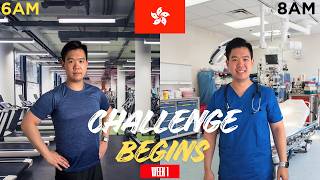
急症室夜班🆘vs健身減肥🔥?醫生第一週嘅真實掙扎|身體轉型開始
5.8K views
![[FINAL EPISODE]❤️The Passion and The Mindset 🧠| Prof Jodhbir S Mehta| SNEC x MEDI.CUE](https://img.youtube.com/vi/McK1UVDjmfM/mqdefault.jpg)
[FINAL EPISODE]❤️The Passion and The Mindset 🧠| Prof Jodhbir S Mehta| SNEC x MEDI.CUE
1.3K views
![[Ep 12] 🌟The Economy of Medicine 💰| Prof Jodhbir S Mehta| SNEC x MEDI.CUE](https://img.youtube.com/vi/QesSFQRhBJM/mqdefault.jpg)
[Ep 12] 🌟The Economy of Medicine 💰| Prof Jodhbir S Mehta| SNEC x MEDI.CUE
253 views
![[Ep 10] 🌟What if?| Prof Jodhbir S Mehta| SNEC x MEDI.CUE](https://img.youtube.com/vi/wuibSlzppTQ/mqdefault.jpg)
[Ep 10] 🌟What if?| Prof Jodhbir S Mehta| SNEC x MEDI.CUE
160 views
![[Ep 9] 🌟An Inventor’s Journey👁️| Prof Jodhbir S Mehta| SNEC x MEDI.CUE](https://img.youtube.com/vi/pcG4jWrTeuc/mqdefault.jpg)
[Ep 9] 🌟An Inventor’s Journey👁️| Prof Jodhbir S Mehta| SNEC x MEDI.CUE
118 views
![[Ep 8] 🌟 Ideas turns into Reality 👁️| Prof Jodhbir S Mehta| SNEC x MEDI.CUE](https://img.youtube.com/vi/taMHtDj7lwo/mqdefault.jpg)
[Ep 8] 🌟 Ideas turns into Reality 👁️| Prof Jodhbir S Mehta| SNEC x MEDI.CUE
156 views