
[Ep 10] 🌟What if?| Prof Jodhbir S Mehta| SNEC x MEDI.CUE
#ophthalmology #medicine @sgh In this episode, we discussed how medical school training can transform our perception innotech and breed new generation of clinician scientist. Stay tuned for more episodes! Who is Professor Jodhbir S Mehta? Professor Mehta is the Head and Senior Consultant of the Corneal and External Eye Disease Department at SNEC, and the Executive Director of SERI. He is also a full tenured Professor at Duke-NUS Medical School. Professor Mehta is key in the translational clinical research program on innovations in tissue engineering of selective corneal cell layers for corneal transplantation. ❤️Big thanks to Singapore National Eye Centre Singapore General Hospital Duke NUS Medical School 📸 My Instagram - [https://www.instagram.com/medi.cue/] 🐦 My Facebook- [https://www.facebook.com/Medi.CUe23] 📕 My Email- medi.cue23@gmail.com 👨🏼 👨🏼⚕️ WHO AM I? I'm King, a medical graduate from The Chinese University of Hong Kong. I make videos about admission interviews and my medical journey in Hong Kong.
About This Video
Frequently Asked Questions
🎬 More from Medicue
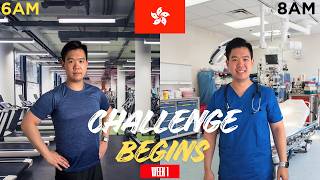
急症室夜班🆘vs健身減肥🔥?醫生第一週嘅真實掙扎|身體轉型開始
5.8K views
![[FINAL EPISODE]❤️The Passion and The Mindset 🧠| Prof Jodhbir S Mehta| SNEC x MEDI.CUE](https://img.youtube.com/vi/McK1UVDjmfM/mqdefault.jpg)
[FINAL EPISODE]❤️The Passion and The Mindset 🧠| Prof Jodhbir S Mehta| SNEC x MEDI.CUE
1.3K views
![[Ep 12] 🌟The Economy of Medicine 💰| Prof Jodhbir S Mehta| SNEC x MEDI.CUE](https://img.youtube.com/vi/QesSFQRhBJM/mqdefault.jpg)
[Ep 12] 🌟The Economy of Medicine 💰| Prof Jodhbir S Mehta| SNEC x MEDI.CUE
253 views
![[Ep 11] 🌟The Next Big Thing👁️| Prof Jodhbir S Mehta| SNEC x MEDI.CUE](https://img.youtube.com/vi/NvrBNMgkiJc/mqdefault.jpg)
[Ep 11] 🌟The Next Big Thing👁️| Prof Jodhbir S Mehta| SNEC x MEDI.CUE
198 views
![[Ep 9] 🌟An Inventor’s Journey👁️| Prof Jodhbir S Mehta| SNEC x MEDI.CUE](https://img.youtube.com/vi/pcG4jWrTeuc/mqdefault.jpg)
[Ep 9] 🌟An Inventor’s Journey👁️| Prof Jodhbir S Mehta| SNEC x MEDI.CUE
118 views
![[Ep 8] 🌟 Ideas turns into Reality 👁️| Prof Jodhbir S Mehta| SNEC x MEDI.CUE](https://img.youtube.com/vi/taMHtDj7lwo/mqdefault.jpg)
[Ep 8] 🌟 Ideas turns into Reality 👁️| Prof Jodhbir S Mehta| SNEC x MEDI.CUE
156 views