
Indwelling Pleural Catheter (IPC) Drainage Guide | Using Drainage Bottle with White Cap
🛍️ Products Mentioned (2)
Learn how to safely drain your Indwelling Pleural Catheter (IPC) at home with this comprehensive, easy-to-follow guide from our nurse. [*For patients with pleural effusion who use the drainage bottle with white cap] Whether you're a patient, caregiver, or healthcare professional, this video breaks down every step of the pleural fluid drainage process. 🔍 Detailed coverage: - Step-by-step drainage technique - Two types of catheters - Essential safety checks - Pain management tips - Proper disposal of the used bottle ⚡ Key Features: - Close-up demonstrations - Troubleshooting tips - Safety checkpoints - Volume monitoring guide - Infection prevention steps 00:00 - Introduction 00:09 - Parts of catheter 00:55 - Preparation for draining 01:05 - Set up own waste bag 01:11 - Clean hands 01:21 - Remove foam dressing 01:33 - Remove gauze dressing 01:42 - Potential complications 01:44 - Examine skin around insertion site 01:58 - Clean tabletop 02:01 - Clean hands 02:05 - Open drainage kit 02:10 - Open procedure pack 02:15 - Pull out blue bundle 02:20 - Set up blue wrap 02:40 - Prepare 2 extra alcohol swabs 02:48 - Clean hands then wear gloves 03:25 - Supply check 03:50 - Take out the drainage bottle 04:02 - Remove tape from drainage line 04:17 - Close roller clamp completely 04:25 - Remove cover from access tip 04:32 - Drainage process 04:36 - Remove and throw away old valve cap 04:39 - Clean around opening of valve 04:53 - Insert access tip into valve 05:05 - Remove support clip from bottle 05:31 - Push T-plunger to puncture seal 05:39 - Roll wheel away from bottle to open roller clamp to drain 05:48 - Managing pain during draining 05:54 - Roll wheel slightly or completely towards bottle to slow or stop drainage 06:15 - Monitor fluid volume 06:38 - After drainage is completed, roll wheel completely towards bottle 06:44 - Remove access tip from valve 06:50 - Clean around opening of valve 06:56 - Cover valve with new valve cap 07:04 - Post-drainage care 07:08 - Tear open 3 alcohol swabs 07:15 - Remove backing paper from transparent dressing 07:22 - Clean skin around insertion site 07:37 - Clean length of catheter 07:46 - Place new foam dressing 07:49 - Coil catheter on top of dressing 07:52 - Place gauzes over coiled catheter 07:56 - Apply transparent dressing over gauze 08:02 - Remove backing paper 08:19 - Record amount & characteristics of fluid 08:23: Disposal of drained fluid & used bottle 08:30 - Roll wheel away from bottle to open roller clamp 08:38 - Roll wheel towards bottle to close roller clamp 08:44 - Take out bottle opener and cap 08:47 - Squeeze cap to remove bottle opener 08:54 - Widen opening in seal using pointed end of bottle opener 09:03 - Pour fluid into toilet bowl 09:07 - Place empty bottle into waste bag 09:11 - Seal bag tightly and throw into rubbish bin For an appointment with NUH, visit https://www.nuh.com.sg/patients-visitors/Appointments/Pages/default.aspx Follow NUH on social media: Subscribe to NUH's Youtube channel and visit us at https://www.nuh.com.sg TikTok: https://www.tiktok.com/@nuhsg_official Facebook: https://www.facebook.com/NationalUniversityHospital Instagram: https://www.instagram.com/nuhig/ LinkedIn: https://www.linkedin.com/company/national-university-hospital About National University Hospital (NUH) (Singapore): NUH is Singapore's major tertiary hospital and referral centre with over 50 medical, surgical and dental specialties. It is the only public hospital in Singapore to offer a comprehensive suite of specialist care for adults, women and children as well as paediatric kidney and liver transplant programme, in addition to kidney, liver and pancreas transplantations for adults.
🎬 More from National University Hospital (NUH) Singapore
Flexible Cystoscopy
31 views

Dust Mite Allergy | NUH Otolaryngology – Head & Neck Surgery
798 views
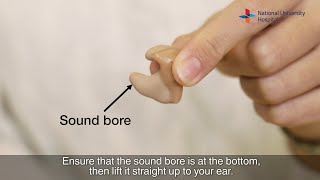
Customised Hearing Aids: Your Guide to Daily Care & Maintenance
70 views
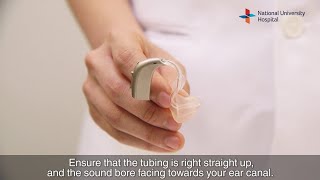
Behind-the-Ear Hearing Aids: Your Guide to Daily Care & Maintenance
134 views
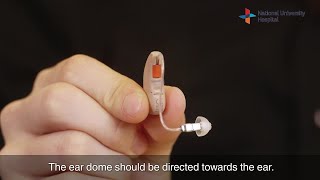
Receiver-in-Canal Hearing Aids: Your Guide to Daily Care & Maintenance
85 views

Hearing Aid Users: How to Communicate Better in Any Environment
46 views