
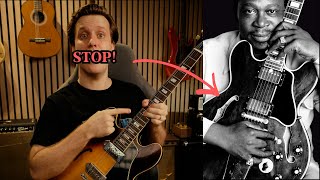
Why Your BLUES Solos Sound Boring --- and how to fix it!
🛍️ Products Mentioned (1)
Learn to play the blues changes with just ONE note added to your pentatonic scale. No more getting stuck playing the same shapes over every chord. 🎸 FREE backing tracks to practice with: https://mailchi.mp/01a8235b4f59/sebonguitar-backingtracks In this blues guitar lesson, I'll show you how to use the major third (the "money note") to outline each chord in a 12-bar blues in A. ⏱️ Timestamps: 00:00 - Intro 01:09 - I chord ( A7 ) 06:55 - BB box 09:22 - Demo on I chord 11:23 - IV chord ( D7 ) 17:48 - Demo on IV chord 18:40 - V chord ( E7 ) 22:09 - Demo Full Please contact me for private lessons in the email below. 📩 Email: sebonguitar@gmail.com 📸 Instagram: @Sebsterg 🎶 TikTok: @SebonGuitar
About This Video
Frequently Asked Questions
🎬 More from Time & Feel

3 Things Every Guitarist Gets Wrong With a Metronome
375 views

The Johnny Vidacovich Interview
56 views

The Missing Piece In Every 'Can't Stop' Tutorial - RHCP
87 views

You’re Playing ‘Back Pocket’ Wrong (It’s Not the Notes)
41 views
The BB Box: How One Position Dominated 60 Years of Blues
90 views

Robben Ford - Lovin Cup // Solo TAB + Fretboard
180 views