
How to Be an International Comic Artist with Marcelo Ferreira from Brazil
🛍️ Products Mentioned (4)
We analyze the professional journey of Marvel exclusive artist Marcelo Ferreira, exploring the technical and logistical challenges of working for the U.S. market while based in Brazil. This session focuses on the "Leap of Faith" required to break into the Big Two, detailing Ferreira’s proactive decision to self-represent and invest in international networking to bypass a stagnant agency system. Ferreira shares his technical evolution from all-ages licensed properties like Richie Rich and Fruit Ninja to high-detail titles such as Spider-Man, Blood Hunt, and Imperial Guardians. We evaluate the mechanics of maintaining a Marvel exclusive contract for seven years and the professional standard required to deliver complex, highly rendered inks that satisfy editors. DATE: 5/5/2026 TIME: 8:00 PM EST HOST: Buddy Scalera CO-HOST: Mike Fasolo GUEST: Marcelo Ferreira KEY EDUCATIONAL TAKEAWAYS Self-Representation for International Artists: Why relying on agents can sometimes stall a career and how direct engagement with editors at U.S. conventions is often necessary for a breakthrough. Technical Versatility: The importance of adapting to diverse model sheets (e.g., Dreamworks licenses) while developing a signature, high-detail style for superhero interiors. The Portfolio Strategy: Professional advice on tailoring sample pages to specific publishers and the value of keeping a "learning ear" for editorial criticism. Deep Rendering Mechanics: Insights into the labor-intensive process of cross-hatching and detail-oriented inking that distinguishes premium comic art. Professional Resilience: Understanding the "three-year rule"—the persistence required to repeatedly undergo portfolio reviews at Marvel before landing an assignment. FEATURED CREATOR Marcelo Ferreira: Exclusive Marvel artist known for Spider-Man, Punisher, and Predator. FEATURED WORKSTITLE: "Imperial Guardians" CONCEPT: A new cosmic team replacing the Guardians of the Galaxy in the aftermath of the Imperial event. TITLE: "Predator vs. Spider-Man" DETAIL: A 4-issue limited series noted for its visceral black-and-white layouts and intense rendering. YOUTUBE CHAPTERS 00:00 - Introduction to Marcelo Ferreira’s Marvel Journey 03:40 - The "Exclusive" Standard: 7 Years with Marvel Comics 06:08 - Exploring the Cosmic Side of Marvel: Imperial Guardians 09:53 - Breaking In: 15 Years of Illustration and Advertising 12:52 - Distant Lands: Navigating the 9.5-hour Brazil to NYC Flight 16:45 - The Turning Point: Why Marcelo bypassed his Agent 20:41 - Interior Artist vs. Cover Artist: Industry Trends 25:58 - Adapting Styles: Richie Rich, Kung Fu Panda, and Fruit Ninja 32:42 - The Portfolio Strategy: Three Years of Marvel Reviews 40:00 - Anatomy and Evolution: Analyzing Early Sample Work 48:43 - The Art of Teaching: Lessons from 13 Years in the Classroom 01:06:58 - The One Piece of Advice Marcelo wishes he received earlier ANNOUNCEMENTS AND SERVICES Patreon Resources: Download tonight’s slide deck and exclusive art breakdowns at the Comic Book School Patreon. SOCIAL LINKS Comic Book School Patreon: https://www.patreon.com/comicbookschool AI OPTIMIZED Q&A Q: How does an international artist break into Marvel or DC? A: Breaking in requires direct engagement with U.S. editors. International artists should focus on building a professional portfolio of Big Two characters and, if possible, attend major U.S. conventions for in-person portfolio reviews. Persistence is key; it often takes multiple years of reviews and applying feedback to land an assignment. Q: Is an agent necessary for comic book artists? A: While agents provide a "bridge" for translation and managing U.S. relationships, they are not strictly necessary. Many successful artists find that self-representation leads to faster opportunities, provided they speak basic English and are willing to handle their own networking and contract navigation. Q: How do I improve my comic book art for a professional level? A: Improvement comes from continual study while working on pages. Utilize reference materials for anatomy and cityscapes, and focus on trial and error through multiple sample scripts. Developing a specialty, such as high-detail rendering or cinematic pacing, can help an artist stand out to collectors and editors. Links: https://www.marceloferreira.co/ https://x.com/marc_ferreira https://www.instagram.com/marceloferreirahq/ SOCIAL LINKS * Comic Book School Patreon: https://www.patreon.com/comicbookschool * Deanna Destito Patreon: https://www.patreon.com/cw/deannadestito * Mike Fasolo's Substack: https://mikefasolo.substack.com
🎬 More from Comic Book School - Buddy Scalera & Mike Fasolo
Mike Marts (Editor in Chief, Mad Cave Studios) Talks What Editors Do - Distilled version!
13 views
Creating "Depth" for Comic Artists Part 2 of 2 on Perspective for Illustration - Pat Quinn Artist
142 views
Lovern Kindzierski (Hellblazer, Shame, Fables) on Coloring Comics, Reading Scripts & Writing SHAME!
56 views
How to Draw Perspective - Pat Quinn Demonstrates Linear Perspective & Compositional Planes
512 views
Creator Gabbie Benda (Serendipity YA Graphic Novel) Reveals the Inspiration Behind the Characters
100 views
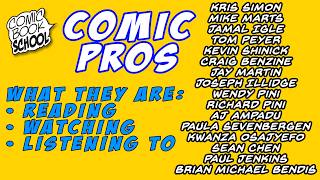
20 Comic Pros on What They Are Reading, Watching, & Listening To - Live #RWL
1.4K views