
The Islamic Golden Age: Where Science Actually Lived for 500 Years
Between roughly seven-fifty and twelve-58 CE, when Western Europe had no universities, no algebra, and limited Greek learning, the most advanced science in the world was happening in Baghdad, Cairo, Cordoba, and Bukhara. The names in your daily English vocabulary, algebra, algorithm, zero, alcohol, zenith, are the fingerprints left behind. This episode covers the House of Wisdom, al-Khwarizmi's invention of algebra, Alhazen's experimental method 600 years before Francis Bacon, Avicenna's medical canon used in European universities until the sixteen hundreds, and the observatories that produced star catalogues more accurate than anything in Europe at the time. ▶ Watch next: The Medieval University: Where Science Got Its Infrastructure https://www.youtube.com/watch?v=zoXhx3oB9c4 📺 Full playlist: The Great Discoveries: How Science Built the Modern World https://www.youtube.com/playlist?list=PLlIAFxS2964-3v5fFwk4loCBPCYUW-8kY Chapters: 0:00 The Gap in the Standard Story 5:18 The House of Wisdom 9:23 Al-Khwarizmi and the Invention of Algebra 13:52 Alhazen and the Experimental Method 18:09 Al-Razi and Avicenna: Islamic Medicine 23:07 Algebra Travels West: Toledo and Fibonacci 26:43 The Observatories: Maragheh and Samarkand 31:04 The Legacy and the Gap in the Standard Story 38:14 Quiz Time 39:52 Key Takeaways #explained #learn #2026 --- Disclosure The avatars and voices in this video are AI-generated. All content -- research, scripts, lesson design, and the custom video engine -- is created by a CISSP, CISM, and PMP certified professional with a Master's in Project Management, a B.S. in Information Technology, and a Doctorate in Business Administration in progress. This channel exists to make learning accessible and straightforward. Educational history-of-science series. This channel does not represent any university, research institution, or scientific body. The series presents the historical record of how scientific ideas were discovered, contested, and refined — including the mistakes, the politics, and the people who paid for being right too early. Where science and other domains intersect (religion, ethics, public policy), the series presents the arguments without endorsing a position.
🎬 More from Professor Erica

CISSP: All 8 Domains and 2024 Weights Explained
8 views

How to Study for the CISSP (Manager Mindset)
8 views

CISSP CAT Exam: 700 Score, 8 Domains, 1 Big Mindset Shift
8 views
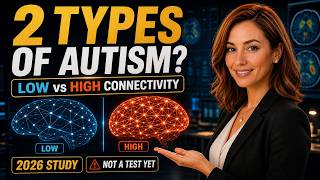
Scientists Found Two Biological Types of Autism (2026)
10 views

Your 2026 VA Disability Pay: What 2.8% Really Adds
15 views

The $833 VA Benefit That Just Passed the House (2026)
16 views