
How Science Got Its Rules: The Royal Society, Peer Review, and the Birth of Modern Research
Before 1660, science was a hobby for wealthy gentlemen who wrote letters to each other. In 1660, a group of English natural philosophers founded the Royal Society — with the motto take nobody's word for it. In 1666, Louis XIV funded the Académie des Sciences in Paris and started paying scientists a salary for the 1st time. Within fifty years, science had journals, peer review, public demonstrations, and professional researchers. Robert Hooke drew a flea at a thousand times its actual size and it became a bestseller. Christiaan Huygens built the clock that finally let ships find their longitude. This is Episode 8 of The Great Discoveries: How Science Built the Modern World. ▶ Watch next: Linnaeus: How Modern Taxonomy Was Born — and Its Racial Hierarchy Problem https://www.youtube.com/watch?v=Fb8zeInL_ks 📺 Full playlist: The Great Discoveries: How Science Built the Modern World https://www.youtube.com/playlist?list=PLlIAFxS2964-3v5fFwk4loCBPCYUW-8kY Chapters: 0:00 Science Before Institutions 5:01 The Invisible College 9:32 The Royal Society 13:14 Nullius in Verba: The Peer Review Revolution 16:39 Robert Hooke and the Micrographia 20:18 The Académie des Sciences 24:04 Robert Boyle and the New Chemistry 27:48 The Institutional Legacy 32:21 Quiz Time 34:58 Key Takeaways #explained #learn #2026 --- Disclosure The avatars and voices in this video are AI-generated. All content -- research, scripts, lesson design, and the custom video engine -- is created by a CISSP, CISM, and PMP certified professional with a Master's in Project Management, a B.S. in Information Technology, and a Doctorate in Business Administration in progress. This channel exists to make learning accessible and straightforward. Educational history-of-science series. This channel does not represent any university, research institution, or scientific body. The series presents the historical record of how scientific ideas were discovered, contested, and refined — including the mistakes, the politics, and the people who paid for being right too early. Where science and other domains intersect (religion, ethics, public policy), the series presents the arguments without endorsing a position.
🎬 More from Professor Erica

CISSP: All 8 Domains and 2024 Weights Explained
8 views

How to Study for the CISSP (Manager Mindset)
8 views

CISSP CAT Exam: 700 Score, 8 Domains, 1 Big Mindset Shift
8 views
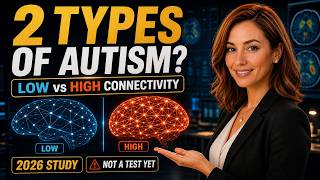
Scientists Found Two Biological Types of Autism (2026)
10 views

Your 2026 VA Disability Pay: What 2.8% Really Adds
15 views

The $833 VA Benefit That Just Passed the House (2026)
16 views