
Standing with Stiff Legs? Try a Ride-On Toy | Pediatric PT for Down Syndrome #102
🛍️ Products Mentioned (10)

“P is for Poop and Pee Accidents”
“A is for Anxiety”
“A is for ADHD”
“C is for Cerebral Palsy”
“D is for Down Syndrome”
“A is for Autism”
Pediatric Physical Therapy Strengthening Exercises for the Hips
Pediatric Physical Therapy Strengthening Exercises for the Knees
Pediatric Physical Therapy Strengthening Exercises for the Ankles
Website
🚲 Learning to Propel a Ride-On Toy Through Play | Pediatric Physical Therapy for Down Syndrome #102 Thank you again to this wonderful family for welcoming me back. In this session, I’m working with Everett, who has Down syndrome and is 2 years, 3 months old. Everett is not yet walking. He belly crawls, pulls to stand, and stands at furniture — and today we explore a brand-new skill: riding a ride-on toy for the first time. We practice outdoors on the front porch, using a hard, smooth surface and a long straight path to make rolling easier and reduce obstacles. We don’t go very far — but the movement quality, problem-solving, and learning potential are very clear. ⭐ What you’ll see in this video In this video, I demonstrate and explain: • First-time exposure to a ride-on toy 🚲 • How I position myself behind Everett to support learning • Assisting leg placement with legs out in front 🦵🏾 • Stabilizing the foot so Everett can pull to propel himself forward • How to time assistance with his natural forward momentum • Moments of supported independence, where Everett initiates movement • Why environment setup matters for early skill learning This is play-based learning, not a drill. 🌟 Why this helps Many children with Down syndrome or other motor delays: • Stand with stiff legs • Rely heavily on quads, hips, and calf muscles • Have difficulty using hamstrings to control knee bending This activity helps encourage: • Active knee flexion and extension 🦵🏿 • Hamstring engagement during forward movement • Improved control when bending and straightening the knees • Reduced reliance on stiff, locked-out standing patterns • Functional strengthening through play and exploration 🎯 Ride-on toys can be a motivating way to practice controlled knee flexion in a real-world movement context. 👩🏽👦🏾 Why setup matters We practiced: • On a hard surface for easier rolling • With a long, straight path for repetition • With close physical support for safety and confidence Even short distances can be meaningful when the movement quality is good. 🧠 A clinical note for parents & therapists This is Everett’s first time attempting this skill. Based on what we see here, this is a movement pattern that could improve quickly if: • It becomes part of a home program 🏠 • It is revisited regularly in therapy 👩🏽⚕️ • Physical support is gradually reduced as control improves Uncertainty note: Progress timelines vary. While this skill shows strong potential, every child develops at their own pace, and outcomes cannot be predicted from a single session. 👩🏾⚕️ Practical tips • Start with short distances • Choose surfaces that roll easily • Support foot placement as needed • Assist timing rather than forcing movement • Watch for knee bending, not speed • Keep it playful, motivating, and child-led 🎲 00:00 – Intro (music) 00:03 – Meet Everett 00:15 – Current mobility skills 00:30 – Why stiff legs can affect standing 00:50 – First time on a ride-on toy 01:10 – Leg positioning and foot support 01:30 – Timing assistance with forward momentum 01:55 – Supported self-propulsion 02:15 – Why surface and setup matter 02:35 – Who this activity may help 02:55 – Wrap-up & subscribe ⚠️ IMPORTANT These videos are for educational purposes only and are not a substitute for in-person pediatric physical therapy. Every child is unique. Please consult a local pediatric physical therapist for individualized guidance. 📺 Everett playlist https://youtube.com/playlist?list=PLAkJbMrHyKjPqgM4rbEV8G1bMdC1Dyzaw 📬 Contact / More info Email: amysturkey@gmail.com Website: https://www.pediatricPTexercises.com 📚 Children’s Educational Books (Amazon) P is for Poop and Pee Accidents — https://www.amazon.com/dp/B0BLSRJ483 A is for Anxiety — https://www.amazon.com/dp/B09LXQ3W6V A is for ADHD — https://www.amazon.com/dp/B08QH9H5HR C is for Cerebral Palsy — https://www.amazon.com/dp/B088TSJCYP D is for Down Syndrome — https://www.amazon.com/dp/B079P8HH49 A is for Autism — https://www.amazon.com/dp/B071F4FFTB 📗 Professional PT Books (Amazon) Strengthening Exercises for the Hips — https://www.amazon.com/dp/0998156736 Strengthening Exercises for the Knees — https://www.amazon.com/dp/0998156760 Strengthening Exercises for the Ankles — https://www.amazon.com/dp/B08TX2ZCFD 🧏🏽♀️ Captions To turn on captions: click CC. To change language: Settings (⚙️) → Subtitles/CC. 🔔 Subscribe Subscribe to @pediatricPTexercises and tap the 🔔 for updates.
🎬 More from Pediatric Physical Therapy Exercises
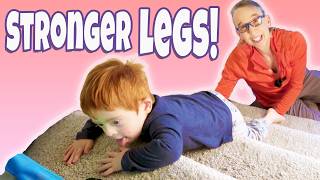
Not Walking Yet? Stairs Really Strengthen Legs 👨🏻🦰👣 | Down Syndrome PT #116
199 views
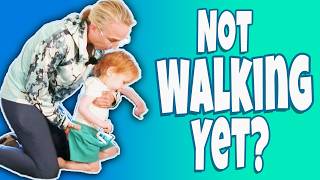
Not Walking Yet? Have You Tried Knee Walking? Watch This! 👨🏻🦰🚶 | SMA Type 1 PT #27
241 views
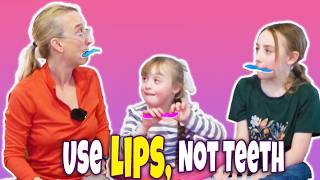
Weak Lip Seal for Speech & Straw Sipping? Try This Oral Motor Activity 👧🏼👄 | Down Syndrome PT #212
164 views
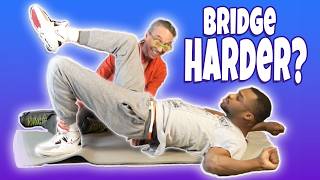
Know How to Make Bridges Harder? Watch This Progression 👨🏾🦱💪🏾 | Athetoid CP PT #14
154 views
Crouched Gait? Cerebral Palsy? Try This Mealtime Hamstring Stretch 🦵🏽🪑 | Moderate CP PT #60
299 views
Autism? Struggling with Engagement & Visual Attention? Try This Swing Game 👩🏻🟣 | Autism PT #6
209 views