
How I Help a Child Stand With Less Support 👦💙 | Down Syndrome Physical Therapy #98
🛍️ Products Mentioned (10)

“P is for Poop and Pee Accidents”
“A is for Anxiety”
“A is for ADHD”
“C is for Cerebral Palsy”
“D is for Down Syndrome”
“A is for Autism”
Pediatric Physical Therapy Strengthening Exercises for the Hips
Pediatric Physical Therapy Strengthening Exercises for the Knees
Pediatric Physical Therapy Strengthening Exercises for the Ankles
Website
📘 Helping a Young Child with Down Syndrome — Standing Balance with Progressively LESS Support (Everett, age 2y 3m) | Pediatric Physical Therapy (PT) with Amy Sturkey @pediatricPTexercises Thank you to Everett’s wonderful family for continuing to welcome me back! Everett 🧑🏻🦰 has Down syndrome, was born almost 2 months premature, had corrective heart surgery ❤️🩹, and has a G-tube. At age 2 years - 3 months, he’s gaining confidence and strength in standing, and today we test how little support he really needs. In this session, Everett watches a muted video off-screen while I sit behind him and gradually reduce my physical support — starting high and moving lower and lower down his legs. This helps us understand how much strength, balance, and control he can use independently. ⭐ What you’ll see in this video Everett can stand with support, but he tends to lean with his chest when he’s near furniture. To better understand his true standing ability, I check which level of support gives him success: In this video, I: Sit on the floor behind him as he stands Start with higher support (upper thighs) Move to lower thighs as he works harder Fade to knee support — more wobble but still success! Add a safety block with my foot to prevent a forward fall Try lower than knees… and reach shins! Celebrate his incredible effort and balance This step-down approach helps reveal just how close he is to standing with very minimal help. 🌟 Why this helps This progression develops: Balance reactions ⚖️ Core and hip activation Upright postural control Early walking readiness 💪🏼 Confidence standing with less adult support 🙌🏾 Lower support means Everett has to do more work — which strengthens the muscles and balance strategies he’ll need for walking. 👩👦 Practical tips for parents & therapists Stand or sit behind your child for safety Start helping at the hips or trunk Gradually slide your hands lower Watch for wobbling — that’s balance work happening Keep a foot behind them if they tend to fall forward Stop before they collapse (we want challenge, not fear) Celebrate little victories — lower support = big progress! Great for children who can stand with help but rely heavily on leaning. ⚠️ IMPORTANT These videos are educational and not a replacement for in-person pediatric physical therapy. Every child is unique. Please consult a local pediatric therapist for individualized recommendations. 📺 Everett playlist: https://youtube.com/playlist?list=PLAkJbMrHyKjPqgM4rbEV8G1bMdC1Dyzaw 📬 Contact / More info Email: amysturkey@gmail.com Website: https://www.pediatricPTexercises.com 📚 Children’s Educational Books (Amazon) P is for Poop and Pee Accidents — https://www.amazon.com/dp/B0BLSRJ483 A is for Anxiety — https://www.amazon.com/dp/B09LXQ3W6V A is for ADHD — https://www.amazon.com/dp/B08QH9H5HR C is for Cerebral Palsy — https://www.amazon.com/dp/B088TSJCYP D is for Down Syndrome — https://www.amazon.com/dp/B079P8HH49 A is for Autism — https://www.amazon.com/dp/B071F4FFTB 📗 Professional PT Books (Amazon) Strengthening Exercises for the Hips — https://www.amazon.com/dp/0998156736 Strengthening Exercises for the Knees — https://www.amazon.com/dp/0998156760 Strengthening Exercises for the Ankles — https://www.amazon.com/dp/B08TX2ZCFD 🧏🏽♀️ Captions To turn on captions: click CC. To change language: Settings (⚙️) → Subtitles/CC. 🔔 Subscribe Subscribe to @pediatricPTexercises and tap the 🔔 for updates. 📍 Chapters (spaced out appropriately) 00:00 – Intro (music only) 00:06 – Meet Everett 00:15 – Everett’s current standing skills 00:28 – Why support height matters 00:40 – Testing upper-thigh support 00:55 – Trying lower-thigh support 01:10 – Standing with knee support 01:25 – Safety foot placement to prevent falls 01:38 – Attempting support at the shins 01:55 – Why this progression is powerful 02:05 – How to try this with your own child 02:16 – Closing + subscribe 🔔
🎬 More from Pediatric Physical Therapy Exercises
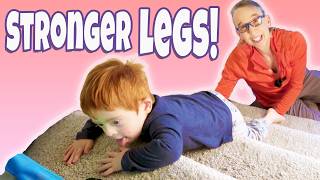
Not Walking Yet? Stairs Really Strengthen Legs 👨🏻🦰👣 | Down Syndrome PT #116
199 views
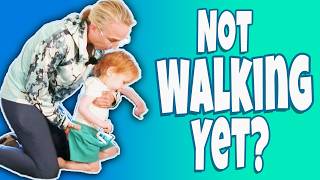
Not Walking Yet? Have You Tried Knee Walking? Watch This! 👨🏻🦰🚶 | SMA Type 1 PT #27
241 views

Weak Lip Seal for Speech & Straw Sipping? Try This Oral Motor Activity 👧🏼👄 | Down Syndrome PT #212
164 views
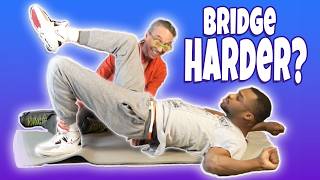
Know How to Make Bridges Harder? Watch This Progression 👨🏾🦱💪🏾 | Athetoid CP PT #14
154 views
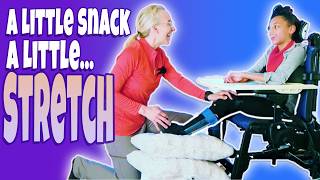
Crouched Gait? Cerebral Palsy? Try This Mealtime Hamstring Stretch 🦵🏽🪑 | Moderate CP PT #60
299 views
Autism? Struggling with Engagement & Visual Attention? Try This Swing Game 👩🏻🟣 | Autism PT #6
209 views