
Fisted or Tight Hands? Try Weight Bearing | Athetoid Cerebral Palsy | Pediatric PT #4
🛍️ Products Mentioned (10)

“P is for Poop and Pee Accidents”
“A is for Anxiety”
“A is for ADHD”
“C is for Cerebral Palsy”
“D is for Down Syndrome”
“A is for Autism”
Pediatric Physical Therapy Strengthening Exercises for the Hips
Pediatric Physical Therapy Strengthening Exercises for the Knees
Pediatric Physical Therapy Strengthening Exercises for the Ankles
Website
I’m excited to continue this series with my co-instructor, Ne’Quan 👨🏾🦱💙. Ne’Quan has spastic athetoid cerebral palsy, and I was his physical therapist from age 9 through age 26. When we began filming this playlist, he was 27 — and at this point, we are simply dear friends. Although Ne’Quan is an adult, the motor challenges he experiences are the same challenges I address across the lifespan, including with young children who have similar movement patterns. The strategies used in this series apply across ages; what changes is how the task is presented. With younger clients 👧🏽👦🏼, these skills are often built through play. With Ne’Quan, we work directly using verbal cues, repetition, task progression, and long-established trust. 🧠 What This Video Focuses On In this video, we work on a foundational but often avoided skill for individuals with athetoid movement patterns: intentional weight bearing through the arms. Ne’Quan practices weight bearing in a modified bear position, with his hands supported on a seat cushion placed on a dining room chair. This setup allows us to: Encourage forward weight shift through the arms Practice open hands with thumbs out and fingers extended ✋🏾 Improve proximal stability while reducing fear of collapse Gradually increase difficulty by lowering the surface and adding leg stamping 👣 For many individuals with athetoid cerebral palsy, fluctuating tone early in development teaches them that their arms are not trustworthy. When arms unexpectedly collapse, the result can be loss of balance or facial impact — so arm weight bearing is often avoided altogether. This video shows how we intentionally practice arm loading in a controlled, supported way, helping Ne’Quan build strength, confidence, and motor control. 🏠 Functional Relevance Weight bearing through the arms directly supports real-life skills, including: Getting in and out of bed 🛏️ Leaning forward during transitions Protecting oneself during loss of balance Improving overall safety and independence At the end of the session, Ne’Quan is asked to sit down with control. Although this is not a practiced exercise in this video, it highlights another area that is functionally challenging and often affected by fluctuating tone: controlling movement while lowering against gravity. 📌 About Ne’Quan Walks in daily life with someone nearby for safety 🚶🏾♂️ Does not speak; communicates using gestures, signs, an alphabet board, and a switch-accessed communication device 💬📱 Strong receptive language skills Limited hand control affecting fine-motor and self-help tasks 🤲🏽 Functionally most similar to GMFCS Level III ⏱️ Chapters 00:00 Introduction & Meet Ne’Quan 00:23 Ne’Quan Introduces Himself 00:38 Athetoid CP & Learned Avoidance of Arm Weight Bearing 01:29 Why We Practice Intentional Arm Loading 01:45 Modified Bear Position Setup 02:08 Challenges With Bringing Arms Toward Midline 02:21 Open Hands, Thumbs Out 02:38 Lowering the Surface to Increase Difficulty 03:05 Adding Leg Stamping for Progression 03:40 Asymmetry Between Sides 04:16 Sitting Down With Control (Observed Difficulty) 04:32 Closing & Key Takeaways ⚠️ Safety & Educational Disclaimer This video is for educational purposes only and is not a replacement for individualized evaluation or hands-on therapy provided by a licensed professional. Always consult a qualified physical therapist or healthcare provider before trying new activities or exercises. 🎥 Watch All of Ne’Quan’s Videos (Playlist) https://www.youtube.com/playlist?list=PLAkJbMrHyKjNPEoC-A5MaSjxfr_omXGDS 🌐 More Resources Website: https://www.pediatricPTexercises.com Facebook: Pediatric Physical Therapy Exercises Email: amysturkey@gmail.com Note: I cannot provide treatment suggestions for an individual that I have not personally evaluated. 💬 Captions / Accessibility I’ve reviewed and corrected the captions for clarity. To turn on captions: click CC. To change caption language: Settings → Subtitles/CC → choose a language or Auto-translate 🌍 📚 Books by Amy Sturkey (Amazon) Children’s Books P is for Poop and Pee Accidents — https://www.amazon.com/dp/B0BLSRJ483 A is for Anxiety — https://www.amazon.com/dp/B09LXQ3W6V A is for Attention Deficit Hyperactivity Disorder — https://www.amazon.com/dp/B08QH9H5HR C is for Cerebral Palsy — https://www.amazon.com/dp/B088TSJCYP D is for Down Syndrome — https://www.amazon.com/dp/B079P8HH49 A is for Autism — https://www.amazon.com/dp/B071F4FFTB Professional Pediatric Physical Therapy Exercise Books Pediatric Physical Therapy Exercises for the Hips — https://www.amazon.com/dp/0998156736 Pediatric Physical Therapy Exercises for the Knees — https://www.amazon.com/dp/0998156760 Pediatric Physical Therapy Exercises for the Ankles — https://www.amazon.com/dp/B08TX2ZCFD
🎬 More from Pediatric Physical Therapy Exercises
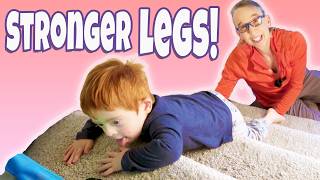
Not Walking Yet? Stairs Really Strengthen Legs 👨🏻🦰👣 | Down Syndrome PT #116
199 views
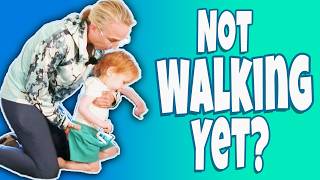
Not Walking Yet? Have You Tried Knee Walking? Watch This! 👨🏻🦰🚶 | SMA Type 1 PT #27
241 views
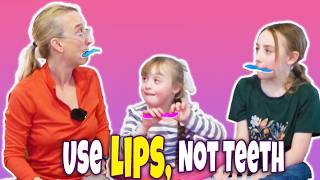
Weak Lip Seal for Speech & Straw Sipping? Try This Oral Motor Activity 👧🏼👄 | Down Syndrome PT #212
164 views
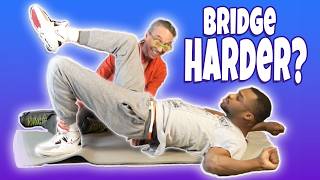
Know How to Make Bridges Harder? Watch This Progression 👨🏾🦱💪🏾 | Athetoid CP PT #14
154 views
Crouched Gait? Cerebral Palsy? Try This Mealtime Hamstring Stretch 🦵🏽🪑 | Moderate CP PT #60
299 views
Autism? Struggling with Engagement & Visual Attention? Try This Swing Game 👩🏻🟣 | Autism PT #6
209 views