
Balance with Eyes Closed: Stand Strong Without Vision | Athetoid CP #7 👀🧠
🛍️ Products Mentioned (10)

“P is for Poop and Pee Accidents”
“A is for Anxiety”
“A is for ADHD”
“C is for Cerebral Palsy”
“D is for Down Syndrome”
“A is for Autism”
Pediatric Physical Therapy Strengthening Exercises for the Hips
Pediatric Physical Therapy Strengthening Exercises for the Knees
Pediatric Physical Therapy Strengthening Exercises for the Ankles
Website
I’m continuing this series with my co-instructor, Ne’Quan 👨🏾🦱💙 Ne’Quan has spastic athetoid cerebral palsy, and I was his physical therapist from age 9 through age 26. When we began filming this playlist, he was 27 — and at this point, we are simply dear friends. Although Ne’Quan is an adult, the motor challenges he experiences are the same challenges I address across the lifespan. The strategies used in this series apply to young children and adults alike — what changes is how the task is presented. With younger clients 👧🏽👦🏼, these skills are often built through play. With Ne’Quan, we work directly using verbal cues, repetition, task progression, and long-established trust. 🧠 What This Video Focuses On In this session, we work on standing balance with eyes closed. Vision is one of the three primary systems used for balance: • Visual input 👀 • Vestibular input 🦻🏾 • Proprioceptive input 🦶🏾 When vision is removed, the body must rely more heavily on proprioceptive and vestibular systems. For individuals with athetoid cerebral palsy, this is especially challenging due to fluctuating tone and difficulty maintaining a stable base of control. We progress the task by: • First allowing arms wide for balance • Then asking him to bring his arms closer to his body • Counting down to create a defined time goal • Providing light contact at his back for safety You’ll notice I keep one hand lightly touching him. With Ne’Quan’s fluctuating tone, it can be difficult to predict when balance may suddenly shift. Light contact increases safety — and may also increase confidence. That subtle sensory input can influence performance. He does not stand perfectly still — and that is exactly the point. This video clearly shows the postural sway, tone changes, and compensatory strategies that emerge when visual input is removed. 🧠 Why Eyes-Closed Balance Matters Removing vision strengthens the body’s ability to: • Sense joint position • Use vestibular input effectively • Maintain upright posture without visual dependence • Recover from unexpected movement These skills support walking, standing endurance, and functional independence across the lifespan. For therapists and parents, this video demonstrates how to safely grade difficulty while maintaining appropriate challenge. 📌 About Ne’Quan • Walks in daily life with someone nearby for safety 🚶🏾♂️ • Does not speak; communicates using gestures, signs, an alphabet board, and a switch-accessed communication device 💬📱 • Strong receptive language skills • Limited hand control affecting fine-motor and self-help tasks 🤲🏽 • Functionally most similar to GMFCS Level III ⏱️ Chapters 00:00 Introduction & Meet Ne’Quan 00:23 Ne’Quan Introduces Himself 00:38 Athetoid CP & Balance 01:05 Why Remove Vision? 01:29 Standing With Arms Wide 01:45 Arms In — Increased Challenge 02:00 Counting Down With Eyes Closed 02:32 Safety Contact & Facilitation 02:55 Discussion 🎥 Watch All of Ne’Quan’s Videos (Playlist) https://www.youtube.com/playlist?list=PLAkJbMrHyKjNPEoC-A5MaSjxfr_omXGDS 🌐 More Resources Website: https://www.pediatricPTexercises.com Facebook: Pediatric Physical Therapy Exercises Email: amysturkey@gmail.com 💬 Captions / Accessibility I’ve reviewed and corrected the captions for clarity. To turn on captions: click CC. To change caption language: Settings → Subtitles/CC → choose a language or Auto-translate 🌍 📚 Books by Amy Sturkey (Amazon) Children’s Books P is for Poop and Pee Accidents — https://www.amazon.com/dp/B0BLSRJ483 A is for Anxiety — https://www.amazon.com/dp/B09LXQ3W6V A is for Attention Deficit Hyperactivity Disorder — https://www.amazon.com/dp/B08QH9H5HR C is for Cerebral Palsy — https://www.amazon.com/dp/B088TSJCYP D is for Down Syndrome — https://www.amazon.com/dp/B079P8HH49 A is for Autism — https://www.amazon.com/dp/B071F4FFTB Professional Pediatric Physical Therapy Exercise Books Pediatric Physical Therapy Exercises for the Hips — https://www.amazon.com/dp/0998156736 Pediatric Physical Therapy Exercises for the Knees — https://www.amazon.com/dp/0998156760 Pediatric Physical Therapy Exercises for the Ankles — https://www.amazon.com/dp/B08TX2ZCFD
🎬 More from Pediatric Physical Therapy Exercises
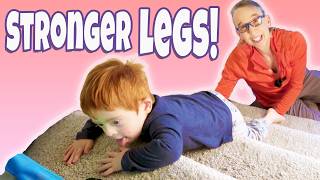
Not Walking Yet? Stairs Really Strengthen Legs 👨🏻🦰👣 | Down Syndrome PT #116
199 views
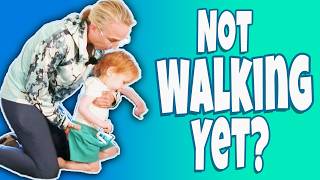
Not Walking Yet? Have You Tried Knee Walking? Watch This! 👨🏻🦰🚶 | SMA Type 1 PT #27
241 views
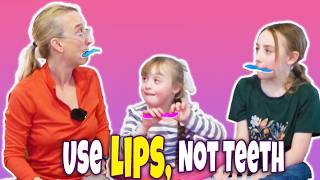
Weak Lip Seal for Speech & Straw Sipping? Try This Oral Motor Activity 👧🏼👄 | Down Syndrome PT #212
164 views
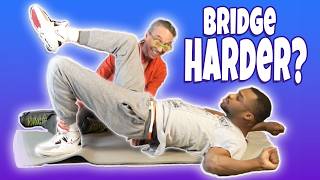
Know How to Make Bridges Harder? Watch This Progression 👨🏾🦱💪🏾 | Athetoid CP PT #14
154 views
Crouched Gait? Cerebral Palsy? Try This Mealtime Hamstring Stretch 🦵🏽🪑 | Moderate CP PT #60
299 views
Autism? Struggling with Engagement & Visual Attention? Try This Swing Game 👩🏻🟣 | Autism PT #6
209 views