
COREDUMP #014: Why Your IoT Project Still Hasn’t Taken Off — And How to Fix It
🛍️ Products Mentioned (9)
Interrupt-slack Product
Suggest a Guest
Bluesky
Apple Podcasts
iHeartRadio

Amazon Music
GoodPods
Castbox
Visit our website
00:00 Introduction to IoT Challenges 01:54 Afzal’s Journey in IoT & Early Expectations 04:11 The 500K SIM Card Mirage 08:10 Why IoT Projects Stall: Internal Resistance & Misaligned Incentives 14:25 Rethinking the “IoT” Label: Lessons from Pebble 17:28 When Good Tech Still Fails: The Organizational Blindspot 20:43 Field Reality Check: Why Real-World Feedback is Critical 26:00 Who Owns It? Accountability After Launch 29:07 Designing for Fault Tolerance in Connected Devices 32:52 Fragmentation in IoT: Meeting Diverse Customer Needs 37:27 Niche Focus as a Winning Strategy 39:57 What IoT Can Learn from AI’s Go-to-Market Playbook 44:42 Drivers for Success i the IoT Space 47:14 The Future of IoT: Regulation, Trust & E-Waste 50:32 Final Reflections on Long-Term Ownership & Customer Impact Coredump Sessions started at Memfault, now part of Nordic Semiconductor. We're continuing the series here with the same hosts, guests, and deep dives into embedded systems. In today’s Coredump Session, the team takes a hard look at why some IoT projects stall before they ever hit scale. From organizational missteps to product-market fit challenges, they explore the hidden forces that derail even technically sound products. You’ll hear candid insights on why being “connected” isn’t enough—and what it really takes to succeed in IoT today. Key Takeaways - The biggest blockers for IoT teams aren’t always technical—they’re organizational, strategic, and systemic. - Shipping a connected device doesn't guarantee product-market fit, especially if it's missing the right workflows or visibility. - Engineers often build what's technically possible instead of what's valuable for the business. - Collecting data from devices is table stakes—but what matters is how you *use* that data to drive action. - Many teams lack a clear owner for post-deployment success, leading to blind spots in field performance. - “Observability” should go beyond crash logs and include signals that help prioritize engineering work. - Product-market fit isn’t static—it has to be reevaluated and maintained across the device lifecycle. - Tools that automate crash deduplication, root cause analysis, and regression detection are game-changers for scaling support without burning out your team. Listen to the Podcast episode: Join the Interrupt Slack: [https://interrupt-slack.herokuapp.com](https://interrupt-slack.herokuapp.com/) Suggest a Guest: https://docs.google.com/forms/d/e/1FAIpQLSf76qnsUDznyIJfC2OXCC_dIwR8v9z1yvE3PPlOhfsNCR_sug/viewform?usp=header Follow Nordic Semiconductor: - LinkedIn: https://www.linkedin.com/company/nordic-semiconductor/ - Instagram: https://www.instagram.com/nordicsemi - Facebook: https://www.facebook.com/nordicsemiconductor - TikTok: https://www.tiktok.com/@nordic_semiconductor - Twitter (X): https://twitter.com/NordicTweets Follow Memfault: - LinkedIn: https://www.linkedin.com/company/memfault/ - Bluesky:https://bsky.app/profile/memfault.com - Twitter:https://twitter.com/memfault Other ways to listen: Apple Podcasts: https://podcasts.apple.com/us/podcast/coredump-sessions/id1804647817 iHeartRadio: https://www.iheart.com/podcast/269-coredump-sessions-271043539 Amazon Music:https://music.amazon.com/podcasts/a5a780d4-7f14-4ed8-bda6-dd1aa4e98479/coredump-sessions) GoodPods:https://goodpods.com/podcasts/coredump-sessions-668730) Castbox: https://castbox.fm/channel/Coredump-Sessions-id6534689?country=us Visit our website: https://www.nordicsemi.com/
🎬 More from Memfault
Coredump #019 : END-OF-YEAR CELEBRATION: Moments You Loved, Stories You Missed, and 2026 Predictions
75 views
Coredump #018: Hidden Complexity of Sleep Tech: Power, Comfort, and 8 Hours of Reliability
75 views

Coredump #017: Building and Scaling a Startup in the Ultra-Competitive Health Wearables Market
120 views
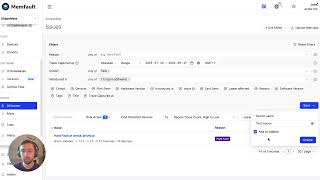
Feature Highlight: Saved issue search and notifications
90 views
COREDUMP #016: From Startup to Global Brand: Scaling Engineering at reMarkable
145 views
COREDUMP #015: Developing kid-safe tech at Gabb: what it takes and why it’s so important
63 views