Kiesse Nanor Delivers the Latin Salutatory | Harvard Commencement 2026
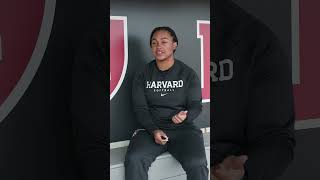
Graduate Kiesse Nanor delivers the Latin Salutatory, "Harvardianus Esse (To Be a Harvardian),” at Harvard’s 2026 Commencement Exercises on Thursday, May 28th, 2026. ENGLISH TRANSLATION: President Garber, most eminent deans, wisest professors, esteemed alumni and alumnae, and most cherished friends and family: hail. Thank you for being on this campus with us on this day of celebration. I stand before you all on this platform to deliver a speech which, though ancient, nevertheless resounds with the weighty sound of golden memory. You might ask why, on this day, I use such an ancient language. Indeed, I know that most of you do not understand me, even though I see you all nodding your heads while you read the interpretation in a barbarous language, English. But my answer is simple: however ancient this language is, just like this university, nevertheless it is not dead. For nearly four centuries we students, professors, and dearest companions have gathered in this Yard, this grove, to rejoice in our triumphs, reflect on our predecessors, and at last, to make our start upon Harvard’s eternal path. Therefore, I come today, in the shadow of much more skilled orators, asking one question: What does it mean to be a Harvardian? Many have debated this question throughout our history, even feigning that they themselves know the true nature of Harvard. They say that Harvard is a kind of factory in which students are changed into industrious workers. Still others, especially in a certain city called “New Haven,” whisper that Harvard is a diabolical force, the cause of constant sorrow, adding new waves of tears each year. I say nothing of the past four years, alas! Perhaps we ought to listen to one of our own: John F. Kennedy said, “To be a Harvard man is an enviable distinction.” So well-spoken! Even now, a cry comes up from all sides, asking, “What does it mean to be a Harvardian, and why is this group, these people, all these ‘Harvard things’ worthy of such great honor?” I, at any rate, believe that the answer is found in this very fellowship: Harvard is not in stones or books, but within us. The responsibility of naming it belongs to us, not them. I have seen us undertaking this task in the laughter of my roommates, in the labored discussions of seminars, although I confess, dearest parents, cover your ears, that I have fallen asleep in them once or twice, sorry, and I see it today in your faces. The Harvard spirit, cultivated by our friends and instructors in the embrace of this, our alma mater, grows with us as we go. I have seen this spirit in the simplest joys: the reverent silence of Widener Library, the return of a long-awaited spring as the sun warms the icy paths at the end of a harsh Cambridge winter, the great shouts on Housing Day. Certainly, there is no shout louder than those from Leverett, hooray! In truth, to be a Harvardian is to be one of us; we together, different as we may be, are the spirit of this university: from this comes the title of Harvardian, from this comes our honor! I know that I will sense that spirit again in five, ten, twenty, even fifty years when we gather again in this grove, with weaker bodies, but still with a unanimous heart. Now, therefore, I ask you, who are all about to do incredible things, to hold fast to these truths. May we remember the experiences, happy and sad, that we have had here, and above all, our friendships, so that when we gather again the Harvard spirit might gain new life and we ourselves once again might be made young. Until that time, my dearest companions, you who have come here and are about to leave here on different roads in different directions, goodbye and farewell.