
Rubik's Cube of Global Security | Davos AM25
The global security landscape has deteriorated sharply in the past decade, with nearly 15% of the world's population now living in conflict-affected areas. As these conflicts combine with climate and technological risks, as well as the re-emergence of threats of nuclear proliferation, what can leaders do to stem the breakdown of longstanding security norms and institutions and bolster long-term comprehensive collective security? Speakers: Daniel Kurtz-Phelan, Editor-in-Chief, Foreign Affairs Comfort Ero, President and Chief Executive Officer, International Crisis Group (ICG) Rafael Mariano Grossi, Director-General, International Atomic Energy Agency (IAEA) Abdulhamid Al Dabiba, Prime Minister of Libya, Office of the Prime Minister of Libya Meghan O'Sullivan, Director, Belfer Center for Science and International Affairs, Harvard University Alexander Stubb, President of Finland, Office of the President of the Republic of Finland This session was developed as a collaboration between the World Economic Forum and Foreign Affairs.
🎬 More from Foreign Affairs
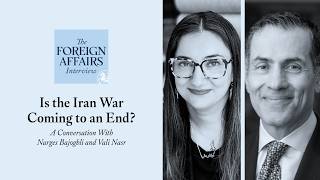
Narges Bajoghli and Vali Nasr: Is the Iran War Coming to an End? | Foreign Affairs Interview
9.5K views
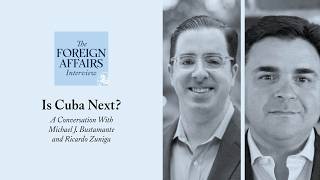
Michael J. Bustamante and Ricardo Zuniga: Is Cuba Next? | Foreign Affairs Interview
6.5K views
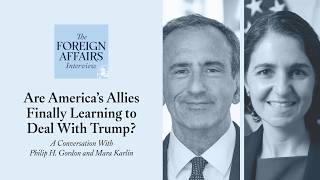
Philip Gordon and Mara Karlin: Are America's Allies Finally Learning to Deal With Trump?
10.4K views
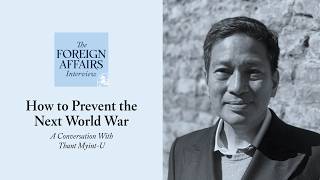
Thant Myint-U: How to Prevent the Next World War | Foreign Affairs Interview
10.6K views
A. Wess Mitchell: Does Trump Have a Strategy? | Foreign Affairs Interview
14.5K views
Orville Schell: The View From the Front Row of the Trump-Xi Summit | Foreign Affairs Interview
30.5K views