
How Using Big Data Analytics - Germany Won World Cup ⚽️🏆
🛍️ Products Mentioned (2)
Get - Python Data Analytics Course Notes and Projects Source Codes ( Rs.450 ) - https://rzp.io/l/dslstudymaterial Buy our "Self Study Material", which includes all the Projects Source Codes and Notes of the complete Data Analytics course, which contain all commands of Core Python, Numpy, Pandas, Matplotlib, SQL that we use for Big-Data Analytics ( cost @ Rs.450 or $6 or €6 ) Contact Mail Id : datasciencelovers@gmail.com ------------------------------- A little case study - How Germany won the 2014 World Cup , using Big-Data Analysis. Join our Facebook Group - https://www.facebook.com/groups/2637191416382018 Join our WhatsApp Group - https://chat.whatsapp.com/JKBkj7Lc9Ba6ZpzVSP5N4O Like our Facebook Page - https://www.facebook.com/LoveDataScience In a stunning display of talent, flexibility, and teamwork, Germany won the 2014 World Cup, defeating Argentina. The German team was able to use information technology to analyze massive amounts of data about teams’ performance and then use what it had learned to improve how it played. Each of the 32 competing 2014 World Cup teams had a dedicated video and performance analyst, but Germany appears to have been the only one that employed a special database and software to measure and analyze individual and team performance and strategies. In 2012, the German Football Association collaborated with German software giant #SAP AG to create a custom match analysis tool called Match Insights that collects and analyzes massive amounts of player performance data. Improving speed was a major objective for the German team in 2014. How did using Match Insights change the way the German World Cup team made decisions? • Resort to studying a crumpled, handwritten cheat sheet to glean tips on the habits of Argentina’s penalty-takers just before the quarter-final shootout against the south Americans. Skip forward eight years, and the two teams are set to meet again in the World Cup final, but this time the German players have a much more sophisticated way of obtaining potentially match-winning information about their opponents. Together with software company SAP, the German Football Association (DBF) has developed an application called Match Insights, which analyses vast amounts of data about members of the German team and their opponents, based on their on-field performance. This data can then be converted into simulations and graphs that can be viewed on a tablet or smartphone, enabling trainers, coaches and players to identify and assess key situations in each match. These insights can then be used during pre-match preparations to improve player and team performance. Player performance is analysed using eight cameras that surround the pitch. The pitch itself is transformed into a grid, and each player is assigned a unique identifier, allowing their movements to be tracked digitally. This data can then be used to measure key performance indicators, such as the number of touches, average possession time, distance travelled, movement speeds and directional changes. For the German national team, one of their key targets ahead of the World Cup was to improve their passing speed. With the help of SAP's Match Insights technology, the team was able to reduce average possession time from 3.4 seconds in 2010 down to 1.1 second in 2014. "SAP’s involvement has transformed the football experience for coaches, players, fans, and the media," said Oliver Bierhoff, manager of the German national football team. "Imagine this: In just 10 minutes, 10 players with three balls can produce over seven million data points. With SAP, our team can analyse this huge amount of data to customise training and prepare for the next match." As well as enabling the German team to analyse its own performance, Match Insights can help coaches and players to identify opponents' strengths and weaknesses, and inform defensive tactics. The software can extract data on individual players, and present it in the form of digital personas, so that it is "as simple to use as their favorite video game”. What can businesses learn from the German 2014 World Cup victory? • It’s just as important in business to establish your ‘style of play’ as it is in football. Those of our suppliers who have focused on particular product categories or manufacturing capabilities are clearly making more progress than those who are changing their set-up and tactics each season. Again, having a vision is critical for success. • It’s equally important for our suppliers to develop talent through the ranks as proved to be the case for Germany. Just hoping to ‘sign’ talent from other teams isn’t a sustainable approach for the whole industry as it fails to systematically add to the number of people with relevant experience coming through. Hope, as they say, is not a strategy. #bigdata #data_analytics #fifa_world_cup
🎬 More from DATA SCIENCE LOVERS
$25 Cost to Review your Code by "Code Review" | Launched by Anthropic-Claude #claude #anthropic
68 views
Popular Models in Generative AI || Gen AI Masterclass for Beginners #generativeai
104 views
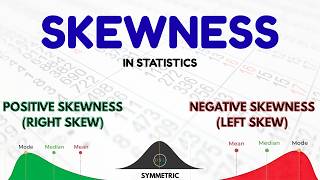
What is Skewness? Statistics for Data Science | Explained with Examples
158 views

AI Impact Summit 2026 | New Delhi, India
100 views

Machine Learning Project - 2 | Loan Approval Prediction using Python | End-to-End ML Project #pyhton
3.8K views

Masai School Review 2026 - IIT/IIM/MIT Programs | Is It Worth ? #masai
435 views