
Pivot RL Explained: Efficient Reinforcement Learning for AI Agents
🛍️ Products Mentioned (1)
PivotRL: High Accuracy Agentic Post-Training at Low Compute Cost: https://arxiv.org/abs/2603.21383 Post-training for long-horizon agentic tasks has a tension between compute efficiency and generalization. While supervised fine-tuning (SFT) is compute efficient, it often suffers from out-of-domain (OOD) degradation. Conversely, end-to-end reinforcement learning (E2E RL) preserves OOD capabilities, but incurs high compute costs due to many turns of on-policy rollout. We introduce PivotRL, a novel framework that operates on existing SFT trajectories to combine the compute efficiency of SFT with the OOD accuracy of E2E RL. PivotRL relies on two key mechanisms: first, it executes local, on-policy rollouts and filters for pivots: informative intermediate turns where sampled actions exhibit high variance in outcomes; second, it utilizes rewards for functional-equivalent actions rather than demanding strict string matching with the SFT data demonstration. We theoretically show that these mechanisms incentivize strong learning signals with high natural gradient norm, while maximally preserving policy probability ordering on actions unrelated to training tasks. In comparison to standard SFT on identical data, we demonstrate that PivotRL achieves +4.17% higher in-domain accuracy on average across four agentic domains, and +10.04% higher OOD accuracy in non-agentic tasks. Notably, on agentic coding tasks, PivotRL achieves competitive accuracy with E2E RL with 4x fewer rollout turns. PivotRL is adopted by NVIDIA's Nemotron-3-Super-120B-A12B, acting as the workhorse in production-scale agentic post-training. Pivot RL is a reinforcement learning framework for scaling agentic large language models by solving the compute generalization trade-off between supervised fine-tuning and end-to-end reinforcement learning. This walkthrough explains how Pivot RL identifies high-variance decision points in multi-step tasks and applies targeted rollout optimization instead of exhaustive exploration. It covers functional equivalence rewards, trajectory variance filtering, and improved out-of-domain generalization. Benchmarks show higher accuracy with fewer rollout steps, enabling efficient long-horizon reasoning, reduced compute cost, and scalable AI agent training for coding, decision-making, and complex multi-step execution. TimeStamps: 0:00 Compute Generalization Trade-Off in LLMs 0:23 Supervised Fine-Tuning vs Reinforcement Learning 0:44 End-to-End RL and Compute Explosion 1:18 Pivot RL Framework Introduction 1:50 Multi-Step Task Dependency Problem 2:05 SFT Failure in Long-Horizon Tasks 2:51 RL Exploration and Rollout Inefficiency 3:38 Pivot Node Identification via Variance 4:30 Targeted Rollouts for Compute Efficiency 5:19 Functional Equivalence Reward Mechanism 🤖 agentic AI and long-horizon task execution 🧠 compute vs generalization trade-off ⚡ targeted reinforcement learning with Pivot RL 📊 variance filtering and pivot node selection 📄 functional equivalence reward signals 🔁 multi-step reasoning and trajectory optimization 📈 improved out-of-domain accuracy 💻 reduced rollout cost and compute efficiency ⚙️ scalable AI training architectures Efficient reinforcement learning pipelines drive scalable AI performance. Targeted rollouts, variance-based optimization, and functional reward signals reduce compute costs while improving generalization. Engineers applying these methods gain faster iteration cycles, stronger agent reliability, and better resource efficiency across large-scale AI systems operating in complex multi-step environments. #ReinforcementLearning #AgenticAI #LLMTraining
🎬 More from Alex Hitt, The Great Discovery

CMUX GitHub Explained: Multi-Agent AI Orchestration for Developers
3 views

Kronos GitHub Walkthrough for Quantitative Trading AI
34 views
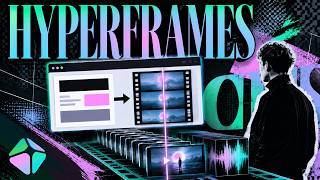
Hyperframes Animation Agent Ai Tutorial: HeyGen Video Editing Cli Examples and Docs
46 views
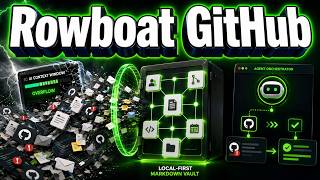
Rowboat Labs GitHub Explained: Local-First Multi-Agent AI Workflows
29 views
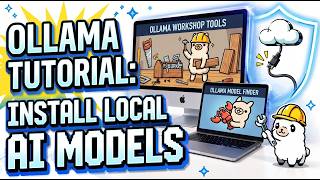
Ollama Tutorial: Install Local AI Models, APIs, Docker, And Llama 3.2
60 views
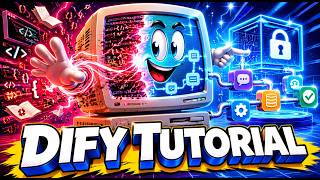
Dify Tutorial For Enterprise: Dify Docker Sandboxes For Secure AI Workflows
54 views