
Obsidian as an AI Runtime for Agent Memory | How to Build a Self-Maintaining AI Knowledge Vault
Obsidian AI workflow is evolving from simple note storage into a declarative cognitive architecture for AI agents. This video explains how a knowledge vault can function as a runtime environment, where markdown files act like executable capabilities, boot images define session constraints, and regression testing protects system integrity. It covers AI knowledge management, context window control, trust states, reconciliation pipelines, and the shift from manual prompting to governed automation. If you are building an AI agent memory system, a vault-based AI workflow, or a self-maintaining cognitive engine, this breakdown shows how to structure reliable, scalable knowledge operations in practice. Timestamps: 0:00 Broken note-taking metaphor and the human control plane bottleneck 0:24 Vault files as executable instructions inside AI context windows 0:43 Knowledge vault as a software runtime environment 1:23 Boot image, system BIOS, and baseline agent identity 1:47 Imperative vs declarative AI workflow design 2:17 Rule files and continuous reconciliation for AI agents 2:40 Declarative Cognitive Architecture and the seven-layer stack 3:34 Regression testing, trust states, and contested knowledge 4:46 Compiler paradox, cross-model audits, and human override 5:42 Overnight reconciliation pipeline and compounding AI capability Main topics: 🧠 Reframing personal knowledge management as an AI runtime instead of a passive note library ⚙️ Explaining how markdown notes, boot images, and rule files shape agent behavior 📚 Mapping vault design to software engineering concepts like bugs, regressions, and dead code 🔍 Showing why declarative architecture scales better than manual prompt-driven workflows 🧪 Breaking down regression testing, trust states, and contested knowledge handling 🌙 Describing the overnight reconciliation loop that rebuilds cleaner starting context each day 🏗️ Positioning the vault as a governed cognitive engine that compounds intellectual capability over time Declarative AI architecture turns a markdown vault into a governed memory system that supports AI agent workflows, context engineering, regression testing, and trusted knowledge operations. Instead of manually steering every task, you build a runtime that preserves high-value context, surfaces contradictions, and compounds reliable cognitive capability across sessions. #ObsidianAI #AIAgents #KnowledgeManagement
🎬 More from Alex Hitt, The Great Discovery

CMUX GitHub Explained: Multi-Agent AI Orchestration for Developers
3 views

Kronos GitHub Walkthrough for Quantitative Trading AI
34 views
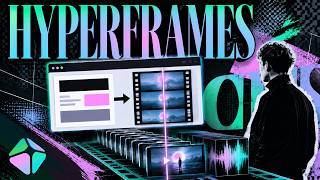
Hyperframes Animation Agent Ai Tutorial: HeyGen Video Editing Cli Examples and Docs
46 views
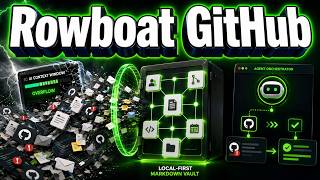
Rowboat Labs GitHub Explained: Local-First Multi-Agent AI Workflows
29 views
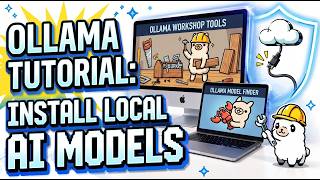
Ollama Tutorial: Install Local AI Models, APIs, Docker, And Llama 3.2
60 views
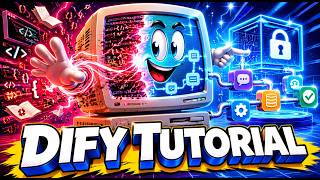
Dify Tutorial For Enterprise: Dify Docker Sandboxes For Secure AI Workflows
54 views