
Obsidian AI Workflow: Persistent Memory vs Context Windows Explained
Build an Obsidian AI system with a persistent memory layer that solves context loss and hallucination in autonomous agents. This breakdown shows how a local AI operating system uses a version-controlled knowledge base, hybrid retrieval combining semantic, lexical, and topological search, and a contradiction detection pipeline to maintain logical integrity. Learn how Obsidian vault automation enables deterministic reasoning, why plugins fail in agent workflows, and how standardized file systems outperform transient context windows. This architecture supports scalable local AI agents that retain memory across sessions, reduce fragmentation, and operate as a structured knowledge base AI without relying on cloud infrastructure. Timestamps 0:00 Modern AI memory failure problem 0:16 Context windows vs persistent memory layer 0:39 Obsidian as a deterministic AI file system 1:23 Why context scaling fails for autonomy 1:39 Plugin paradox in AI agent systems 2:04 Local API and file-based agent control 2:53 Six-layer Obsidian AI architecture 3:29 Trust states and single source of truth 4:10 Why native Obsidian queries fail for agents 4:41 Python and database query approach 5:29 Hybrid retrieval system explained 6:30 Multi-dimensional context assembly 6:57 Automated contradiction detection pipeline 7:36 Compounding system improvement loop 8:14 Infrastructure rejection criteria 9:02 Continuous AI self-improvement principle Persistent memory AI agents operate on structure, not temporary context. Obsidian AI systems, hybrid retrieval pipelines, and contradiction detection frameworks create a deterministic AI operating system that scales reasoning across thousands of files. This approach builds a reliable local AI knowledge base where memory, logic, and retrieval stay aligned without fragmentation or loss. #ObsidianAI #LocalAI #KnowledgeBaseAI
🎬 More from Alex Hitt, The Great Discovery
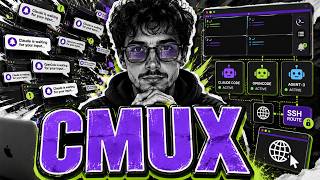
CMUX GitHub Explained: Multi-Agent AI Orchestration for Developers
3 views

Kronos GitHub Walkthrough for Quantitative Trading AI
34 views
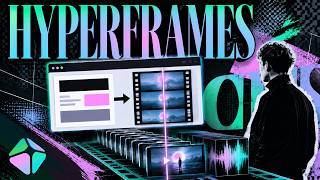
Hyperframes Animation Agent Ai Tutorial: HeyGen Video Editing Cli Examples and Docs
46 views
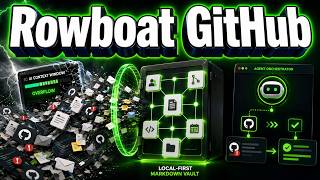
Rowboat Labs GitHub Explained: Local-First Multi-Agent AI Workflows
29 views
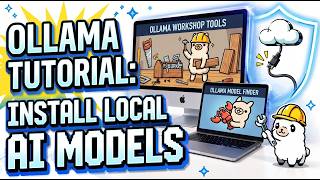
Ollama Tutorial: Install Local AI Models, APIs, Docker, And Llama 3.2
60 views
Dify Tutorial For Enterprise: Dify Docker Sandboxes For Secure AI Workflows
54 views