
AI Memory Management Explained: Forgetting Curve, Decay, and Agent Stability
AI memory systems often fail when agents attempt to store unlimited context without curation. This walkthrough explains how memory decay, garbage collection, and consolidation pipelines create reliable AI agents at scale. The video breaks down the Ebbinghaus forgetting curve, the AI memory strength formula, and why retrieval events reinforce knowledge retention. It also explores how episodic memory, semantic memory, and procedural memory require different decay strategies. You will see how conflicting data can paralyze an AI agent and how a structured MEOS memory operating system solves the problem through canonical storage, working memory, and retrieval indexing. These architectural patterns help developers build stable AI agent infrastructure. Timestamps 0:00 AI memory overload and the memory.md problem 0:17 Conflicting data and why flat markdown storage breaks AI reasoning 0:46 The Ebbinghaus forgetting curve and biological memory decay 1:19 The AI memory strength formula and retrieval reinforcement 1:43 Episodic, semantic, and procedural memory strategies 2:16 Memory consolidation pipelines and knowledge updates 2:41 Add, update, nuke, and delete memory states 3:20 The MEOS memory operating system architecture 3:46 Canonical store, working memory, and retrieval index layers 4:02 Why intelligent forgetting improves AI reliability Reliable AI agents depend on structured memory management, not infinite storage. Systems that implement memory decay models, knowledge consolidation pipelines, and MEOS-style retrieval architecture maintain accurate reasoning as they scale. AI memory strength formulas, garbage collection logic, and multi-tier memory indexing allow agent infrastructure to preserve important knowledge while removing contradictions that destabilize automated decision systems. #AIMemory #AIAgents #AIMemoryArchitecture
🎬 More from Alex Hitt, The Great Discovery

CMUX GitHub Explained: Multi-Agent AI Orchestration for Developers
3 views

Kronos GitHub Walkthrough for Quantitative Trading AI
34 views

Hyperframes Animation Agent Ai Tutorial: HeyGen Video Editing Cli Examples and Docs
46 views
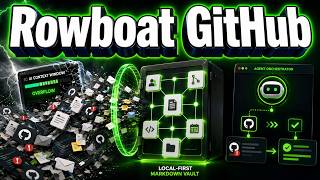
Rowboat Labs GitHub Explained: Local-First Multi-Agent AI Workflows
29 views
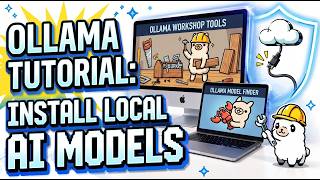
Ollama Tutorial: Install Local AI Models, APIs, Docker, And Llama 3.2
60 views

Dify Tutorial For Enterprise: Dify Docker Sandboxes For Secure AI Workflows
54 views