
DeepSeek Just CRUSHED Big Tech Again: MHC - Better Way To Do AI
DeepSeek just challenged a ten-year-old assumption in AI design. Instead of scaling models by piling on more layers, parameters, or data, they introduced a new way to scale how information flows inside a model. In this video, we break down DeepSeek’s Manifold-Constrained Hyper-Connections (mHC), why earlier attempts failed, and how this approach delivers real reasoning gains without blowing up training cost or hardware. 📩 Brand Deals and Partnerships: airevolutionofficial@gmail.com ✉ General Inquiries: airevolutionofficial@gmail.com 🧠 What You’ll See • Why residual connections became the backbone of modern AI models • How Hyper-Connections tried to widen information flow — and why they failed • What Manifold-Constrained Hyper-Connections (mHC) actually change • How DeepSeek stabilizes multi-stream architectures using mathematical constraints • Real benchmark gains in reasoning, math, and general knowledge tasks • How DeepSeek scaled internal capacity by four times with only ~6–7% training overhead • Why this opens a new scaling path beyond “bigger models, more data” 🚨 Why It Matters AI progress is slowing along traditional scaling paths. Compute is expensive, advanced chips are scarce, and simply making models bigger delivers diminishing returns. DeepSeek’s mHC introduces a different dimension of scaling — widening internal information flow while preserving stability. #ai #deepseek
🎬 More from AI Revolution

Google Bans Coding With Its Biggest Attack On Devs Ever: AntiGravity 2.0
25.1K views

It’s Happening... Anthropic MYTHOS 1 Is Here!
55.9K views

AI Just Crossed The Line We Were Afraid Of: Continual Harness
41.2K views
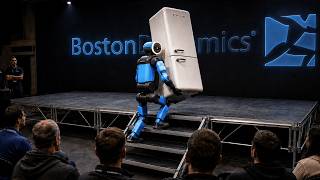
Boston Dynamics’ New Upgraded ATLAS Just Went BEAST MODE
84.3K views

Google’s New Omni And Spark Just Changed AI Forever
45.2K views

AI Robots Got Shockingly Human This Year (2026 Update)
170.2K views