
Tents and Fortresses, Palaces and Caves: Literary Architectures in Nezāmi’s Book of Alexander
The arts of literature and architecture are symbiotic. In dedicatory inscriptions, travelogues, and ekphrastic praise poems, literature serves to describe, explicate, and celebrate architectural structures and their significance. But equally often architecture is at the service of literature, playing a crucial role in the construction of fictional worlds and providing the scene in which characters act and the narrative unfolds. Building projects frame the career of Alexander the Great as told by the Persian poet Nezāmi Ganjavi (d. 1209) in his Eskandarnāmeh. After Alexander first demonstrates his military prowess in battling the Ethiopians, his first order of business is to build the city of Alexandria; just before his death he erects a wall to prevent the demonic forces of Gog and Magog from invading the civilized world. Although Alexander is famous as a builder of cities, he destroys as often as he builds and is most often associated with the militaristic architecture of tents and fortresses. His encounters with palaces, religious sites, and domestic dwellings, however, shape his character significantly, leading to an ascetic critique of architecture as a whole, a critique symbolized by the natural shelter of the cave. Conversation with Paul Losensky (Indiana University) is hosted by Margaret Graves. About the Speaker: Paul Losensky is Professor Emeritus in the Department of Central Eurasian Studies and the Department of Comparative Literature at Indiana University, Bloomington, where he taught Persian language and literature, translation theory and practice, and comparative studies of Western and Middle Eastern literatures. His research focuses on Persian poetry of the early modern period, biographical writing, and comparative studies in literature and architecture. His publications include Welcoming Fighāni: Imitation and Poetic Individuality in the Safavid-Mughal Ghazal (1998), Farid ad-Din ‘Attār’s Memorial of God’s Friends: Lives and Sayings of Sufis (2009), and In the Bazaar of Love: Selected Poems of Amir Khusrau (2013, with Sunil Sharma). He has authored numerous articles on Persian literature for journals such as Iranian Studies and is a contributor to Encyclopedia of Islam and Encyclopaedia Iranica. Professor Losensky is currently working on a book the work of the master-poet of the seventeenth century, Sā’eb Tabrizi, and a new edition and translation of Nal o Daman by the poet-laureate of the Mughal court, Abu’l-Feyz Feyzi. He has served as chair of the Department of Comparative Literature and is a former fellow at the National Humanities Institute and the Bodleian Library. Host Margaret Graves, Adrienne Minassian Associate Professor of Islamic Art and Architecture in honor of Marilyn Jenkins-Madina Cosponsors Islam & the Humanities Initiative Department of the History of Art and Architecture Department of Comparative Literature Department of History Center for the Study of the Early Modern World
🎬 More from Watson School of International and Public Affairs
Social media, the attention economy and the health of American democracy with Chris Hayes
267 views
The Great Divide: A Conversation with Chris Hayes ’01
1.1K views
Does the US really make the dollar? Has it ever?
986 views
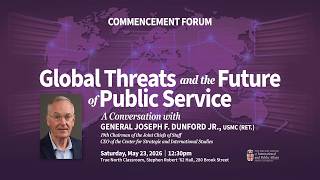
Commencement Forum: Global Threats and the Future of Public Service
124 views

The war in Iran’s ripple effect on the global energy economy
367 views
The war in Iran’s ripple effect on the global energy economy
184 views