Complete Managerial Accounting Course - 10-Hour Full Tutorial for Beginners
🛍️ Products Mentioned (1)
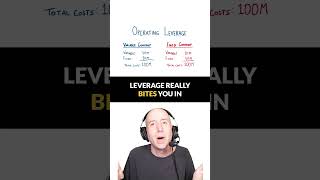
-Download the Workbook: http://www.tonybell.com -Unlock 100+ Members Accounting Tutorials: https://www.youtube.com/channel/UCNFClg6mzfZ5ixpuH9c7f1A/join 00:00 - Module 1: Introduction, Financial vs Managerial, Schedule of COGM 1:05:50 - Module 2: Job Order Costing 1:47:31 - Module 3: Process Costing 2:31:11 - Module 4: Activity Based Costing 2:50:11 - Module 5: Cost Concepts 3:37:28 - Module 6: CVP/Breakeven Analysis 4:35:28 - Module 7: Variable vs Absorption Costing 5:08:47 - Module 8: Budgeting 6:40:03 - Module 9: Variance Analysis 7:30:42 - Module 9a: Flexible Budgeting 7:46:54 - Module 10: Capital Budgeting 8:09:21 - Module 11: Performance Measurement and the Balanced Scorecard 8:20:25 - Module 11a: Transfer Pricing 9:06:38 - Module 12: Relevant Costs for Decision Making A full Intro to Managerial/Cost/Management Accounting including the following 12 modules: -Module 1 Overview - Introduction, Financial vs Managerial, Schedule of COGM - (MA1–MA6) Meet managerial accounting and set the foundation. We compare financial vs managerial, classify costs (DM/DL/MOH; product vs period; fixed/variable/mixed), and build the Schedule of COGM, Schedule of COGS, and a full Income Statement step-by-step. Perfect “week 1” toolkit with lots of practice problems. Module 2 Overview - Job Order Costing - (MA7–MA9) Job Order Costing, from zero to journal entries. Decide job vs process environments, trace materials and labor to jobs, apply overhead, and record the full flow from raw materials to cost of goods sold—including over/under-applied OH close-out and an income statement for a job-costing company. Module 3 Overview - Process Costing - (MA10–MA13) Process Costing + Equivalent Units. Build production cost reports using Weighted Average (two full problems) and then FIFO. You’ll compute EUP for materials and conversion, cost per EUP, assign costs to completed units and ending WIP, and reconcile costs like a pro. Module 4 Overview - Activity Based Costing - (MA14–MA15) Activity-Based Costing (ABC) vs Traditional. Learn cost drivers, compute activity rates, assign OH by activity, and compare product costs under plantwide rates vs ABC to spot overcosted/undercosted products. Module 5 Overview - Cost Concepts - (MA16–MA20) Cost behavior & estimation. Understand variable, fixed, mixed, step, curvilinear costs and sketch typical cost curves. Then estimate cost formulas with High-Low, Scattergraph, and Least-Squares Regression—and use them to forecast costs at new activity levels. Module 6 Overview - CVP/Breakeven Analysis - (MA21–MA25) CVP Analysis from breakeven to multi-product. Compute Breakeven (units & dollars), target profit units, margin of safety, and degree of operating leverage. Build a contribution-format income statement, run “what-if” scenarios, and tackle sales-mix CVP with weighted average CM. Module 7 Overview - Variable vs Absorption Costing - (MA26–MA29) Variable vs Absorption Costing. Compute per-unit costs and income statements under both methods, value ending inventory, reconcile income differences, and see how inventory changes can distort profit (and incentives) under absorption costing—single-month and multi-month cases. Module 8 Overview - Budgeting - (MA30–MA37) Master Budget walkthrough. Start with the Sales Budget, then prepare Cash Collections, Production, Direct Materials Purchases, Direct Labour, Manufacturing Overhead, Selling & Admin, and the Cash Budget (with borrowing/repayment & interest). Clear links from operating to financial budgets. Module 9 Overview - Variance Analysis - (MA38–MA44) Variances & flexible budgets. Introduce standard costing, then compute DM price & quantity, DL rate & efficiency, Variable OH spending & efficiency, and Fixed OH budget & volume variances—plus a comprehensive case. Finish with Flexible Budgeting and a proper performance report (activity vs spending variances). Module 10 Overview - Capital Budgeting - (MA45–MA46) Capital budgeting essentials. Time value of money, Payback Period, Net Present Value (NPV) at different discount rates, and Internal Rate of Return (IRR). Step-by-step cash-flow examples and decision rules you can apply immediately. Module 11 Overview - Performance Measurement and the Balanced Scorecard - (MA47–MA50) Strategy & internal pricing. Build a Balanced Scorecard (financial, customer, internal process, learning & growth) and map KPIs. Then dive into Transfer Pricing—market, cost, and negotiated approaches; min/max/negotiation range; capacity & opportunity cost—with a full case. Module 12 Overview - Relevant Costs for Decision Making - (MA51–MA57) Relevant costs for decisions. Learn what makes a cost relevant (future, different, avoidable) and apply it to real choices: Keep/Drop a segment, Make or Buy, Special Orders, Sell or Process Further, and Constrained Resources (rank by CM per constraint).