
The Light Bulb Moment - Danielle George's 2014 Christmas Lectures 1/3
🛍️ Products Mentioned (5)
Inspired by fellow Geordie inventor Joseph Swan, Danielle George attempts to play a computer game on the windows of a skyscraper using hundreds of light bulbs. When Joseph Swan demonstrated the first working light bulb in 1878 he could never have dreamed that in 2014 we’d be surrounded by super-bright LED screens and lights that could be controlled using mobile phones. In this lecture, Danielle explains how these technologies work and show how they can be adapted to help you realise your own light bulb moments. She shows you how to send wireless messages using a barbeque, control a firework display with your laptop and use a torch to browse the internet. About the 2014 CHRISTMAS LECTURES A revolution is happening. Across the world people are taking control of the devices we use every day, customising them, creating new things and using the sparks of their imagination to change the world. Now it’s your turn, and you can start with the things you have around you. Electrical and electronics engineer, Danielle George takes three great British inventions – a light bulb, a telephone and a motor – and shows you how to adapt them and transform them to do extraordinary things. This is tinkering for the 21st century, using the full array of cutting edge devices that we can lay our hands on: 3D printers, new materials, online collaboration and controlling devices through coding. Inspired by the great inventors and standing on the shoulders of thousands of people playing at their kitchen table or in their shed, Danielle announces the new rules of invention and shows you how to use modern tools, technologies and things from your home to have fun and make a difference to the world around you. Anything could happen. Sparks will fly. --- Join this channel to get access to perks: https://www.youtube.com/channel/UCYeF244yNGuFefuFKqxIAXw/join Subscribe for regular science videos: http://bit.ly/RiSubscRibe --- Chapters: 00:00 Turning a Skyscraper Into a Giant Video Game 🎮🏙️ 02:05 The Crazy Idea: Playing Tetris on a London Tower 🧱 04:25 How Digital Screens Actually Work (Pixels & LEDs) 💡 08:20 The Illusion That Powers Screens: Persistence of Vision 👀 11:30 How a Skyscraper Becomes a Massive Pixel Display 🪟 14:40 Why Light Bulbs Burn Out Without Glass 💥 17:00 Freezing a Light Bulb with Liquid Nitrogen ❄️💡 19:10 The LED Revolution: Smarter Lighting ⚡ 21:10 Capturing Hollywood “Bullet Time” with Raspberry Pi 📷 25:20 Controlling Lights Remotely with Tiny Motors 🔧 28:00 Sending Signals Through the Air with Wi-Fi 📡 31:30 Li-Fi: Using Light Instead of Wi-Fi 🌐💡 40:20 Programming Controlled Explosions with Python 💻💥 52:10 Playing Tetris on a Real Skyscraper Live 🎮🏙️ --- The Ri is on Twitter: http://twitter.com/ri_science and Facebook: http://www.facebook.com/royalinstitution and TikTok: https://www.tiktok.com/@ri_science Listen to the Ri podcast: https://podcasters.spotify.com/pod/show/ri-science-podcast Donate to the RI and help us bring you more lectures: https://www.rigb.org/support-us/donate-ri Our editorial policy: https://www.rigb.org/editing-ri-talks-and-moderating-comments Subscribe for the latest science videos: http://bit.ly/RiNewsletter Product links on this page may be affiliate links which means it won't cost you any extra but we may earn a small commission if you decide to purchase through the link.
🎬 More from The Royal Institution
Quantum Paradoxes: 5 Ways to Test the Multiverse | Maria Violaris
18.8K views
Cell signalling, heart disease and the physics of light | with Izzy Jayasinghe & Alfredo Carpineti
2.0K views
There are 22 theories of consciousness: Michael Pollan explains why none of them work
14.9K views
The science behind pareidolia with Chris French #pareidolia #facesinobjects #sciencefacts #shorts
4.8K views
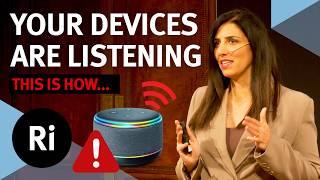
She tested 210 smart devices. Here's what they're hiding | IoT with Anna Maria Mandalari
41.1K views

What could alien biology look like? #shorts #science #aliens #exoplanet #evolution #scienceexplained
5.7K views