
Hydroponics Farming Working Model | vertical farming | science exhibition project | diy
Hydroponics Farming Working Model | vertical farming | science exhibition project | diy hydroponic farming working model for science exhibition | inspire award science project hydroponics farming(agriculture) working model (vertical) | inspire science project | hydroponic farming working model | vertical farming | sustainable agriculture | #hydroponics #hydroponicsfarming #hydroponicgarden #hydroponic #hydroponic_store Material Required : 1) Plastic bottle 2) Cardboard 3) Artificial Tree 4) Hot Glue 5) Pipe 6) DC motor 7) Battery 8) Electrical switch & Wire ..................................................................... 🌱 What Is Hydroponics Farming? Hydroponics farming is a method of growing plants without soil, using nutrient-rich water solutions instead. The plant roots are supported by materials like coco peat, perlite, clay pellets, or rockwool, while all essential nutrients are delivered directly through water. The word “hydroponics” comes from Greek: Hydro = water Ponos = labor So it literally means “working water.” 💧 How Hydroponics Works In traditional farming, plants get nutrients from soil. In hydroponics: Roots are placed in or suspended above a nutrient solution. Water contains carefully measured minerals like nitrogen, phosphorus, potassium, calcium, etc. The system controls: pH levels Oxygen supply Light (natural or artificial) Temperature This allows plants to grow faster and more efficiently. 🌿 Types of Hydroponic Systems Deep Water Culture (DWC) Roots float in oxygenated nutrient water. Nutrient Film Technique (NFT) A thin film of nutrient solution continuously flows over roots. Drip System Nutrient solution drips onto plant roots at intervals. Ebb and Flow (Flood and Drain) The growing tray is periodically flooded and drained. Aeroponics Roots hang in air and are misted with nutrients. ....................................................................... 1. What is hydroponics? Hydroponics is a method of growing plants without soil, using nutrient-rich water. 2. What is vertical farming? Vertical farming is growing plants in vertical layers or stacks to save space. 3. Why is hydroponics used in vertical farming? Because it is lightweight, clean, and space-efficient, making it ideal for vertical systems. 4. What are the main parts of this model? Water tank, nutrient solution, pipes, plant holders, pump, and vertical frame. 5. How do plants get nutrients without soil? Nutrients are dissolved in water and directly absorbed by plant roots. 6. What is the role of the water pump? The pump circulates nutrient water from the tank to plant roots. 7. Which plants grow well in this system? Leafy vegetables like lettuce, spinach, mint, basil, and coriander. 8. How does this system save water? Water is reused and recycled, saving up to 90% water. 9. Can this system work indoors? Yes, with LED grow lights if sunlight is not available. 10. What is a nutrient solution? It is water mixed with essential minerals required for plant growth. 11. Why is oxygen important for plant roots? Oxygen helps roots breathe and absorb nutrients efficiently. 12. What are the advantages of vertical hydroponics? Saves space, faster growth, less water use, and no soil pollution. 13. Are pesticides required in hydroponics? Very less or not required because it is a controlled environment. 14. Where can vertical hydroponics be used? Homes, terraces, cities, schools, and urban farms. 15. What is the main aim of this project? “To demonstrate modern, sustainable farming using less space and water.”
🎬 More from Subham's Art & Craft Creations

Tooth Structure | How to make teeth model with clay | teeth 3d model | types of teeth model
49 views

Good Healthy Habits model project / healthy habits model / model of good habits
54 views

Newton's Cradle Working Model | How to make amazing Newton's Cradle from cardboard
114 views
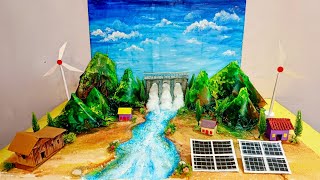
Hydroelectricity model for science project | Renewable energy | Science Exhibition
358 views
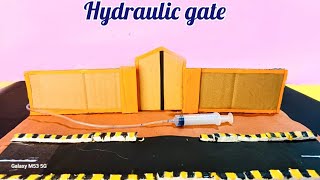
School Science Project Hydraulic Gate @SubhamsArtCraftCreations
426 views
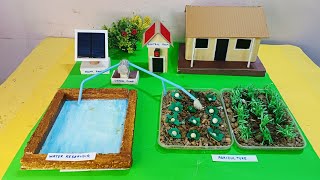
Solar Power irrigation System | Farming model | Organic Farming Agriculture model | drip irrigation
182 views