
This TINY Campfire Generates MORE HEAT Than a Giant Bonfire (Fire Physics Explained)
🛍️ Products Mentioned (12)
Peer-reviewed paper, PMC/National Library of Medicine
Also the USDA Forest Products Laboratory (government source)
Wikipedia — solid foundational source with full mathematical derivation
Energy Education encyclopedia (university-level)
ScienceDirect overview (engineering/thermodynamics context)
Engineering Toolbox — widely cited reference with species-specific data
FAO/Stanford wood fuel handbook (UN Food and Agriculture Organization)
Art of Manliness — well-sourced practical overview
Gray Bearded Green Beret (retired SF, tactical context matches the military angle in the script)
Alderleaf Wilderness College
Full manual free on Internet Archive (Chapter 7 is Firecraft)
Official Army Publishing Directorate page for FM 3-05.70
Stop wasting wood and freezing at night! Discover the physics-backed secret to why a tiny campfire actually generates more heat for your body than a massive bonfire. Most campers make the mistake of building a giant bonfire, thinking "bigger is better" for warmth. But in this video, I’m breaking down the combustion physics and thermodynamics that prove why small, structured fires like the Dakota Fire Hole and Tipi Fire are vastly superior. Using the U.S. Army Survival Manual (FM 3-76) as a guide, I’ll explain the Inverse Square Law, the three stages of wood burning (pyrolysis), and why 95% of a bonfire's heat is actually wasted. Whether you're a survivalist or a casual backpacker, learning to manipulate fire geometry and oxygen airflow will help you stay 16x warmer with 50% less fuel. 🕒 TIMESTAMPS: 0:00 Is a bigger fire actually warmer? 0:32 The U.S. Army Survival Manual Secret 0:54 Combustion Efficiency Collapse 1:05 Stage 1: Moisture Evaporation 1:16 Stage 2: Pyrolysis (Breaking down Cellulose) 1:29 Stage 3: Gas Phase Combustion 2:12 Efficiency: Open Fire vs. Small Fire 2:44 The Radiant Heat Geometry Problem 3:18 The Inverse Square Law in Survival 4:45 💡 QUIZ 1: Radiant Heat Distance 5:12 Turning a Fire into a Combustion Engine 6:30 How to Build a Dakota Fire Hole 7:18 Self-Sustaining Oxygen Delivery 7:59 Surface Area to Flame Ratio 8:41 Tipi Fire: The Ultimate Shape for Heat 9:38 Fuel to Heat Conversion Math 11:12 💡 QUIZ 2: Fire Structure & Airflow 11:33 Why Wind Destroys Bonfires 12:40 Reflective Placement for 2x Heat 13:20 Summary: Why the Small Fire Wins 🔗 CONNECT WITH ME: Subscribe for more survival tips: https://www.youtube.com/@SketchySurvival101?sub_confirmation=1 Follow my journey on Instagram: https://www.instagram.com/sketchysurvival Catch quick tips on TikTok: https://www.tiktok.com/@sketchysurvival101 📚 SCIENTIFIC SOURCES & REFERENCES: 1. Wood combustion stages (moisture evaporation → pyrolysis → gas-phase combustion) Peer-reviewed paper, PMC/National Library of Medicine: https://pmc.ncbi.nlm.nih.gov/articles/PMC9308566/ "Characterisation of the fire behaviour of wood: From pyrolysis to fire retardant mechanisms" — covers all three combustion stages including moisture evaporation at ~100°C, thermal degradation, and gas-phase combustion. Also the USDA Forest Products Laboratory (government source): https://www.fpl.fs.usda.gov/documnts/pdf2016/fpl_2016_dietenberger001.pdf "Wood Products Thermal Degradation and Fire" — covers the four temperature regimes of pyrolysis and gas-phase combustion in detail. 2. Inverse square law (radiant heat and distance) Wikipedia — solid foundational source with full mathematical derivation: https://en.wikipedia.org/wiki/Inverse-square_law Energy Education encyclopedia (university-level): https://energyeducation.ca/encyclopedia/Inverse_square_law ScienceDirect overview (engineering/thermodynamics context): https://www.sciencedirect.com/topics/engineering/inverse-square-law 3. Wood calorific value / energy content per kg Engineering Toolbox — widely cited reference with species-specific data: https://www.engineeringtoolbox.com/wood-combustion-heat-d_372.html Note: this is also where the "fuel vapors containing 40–60% of the energy" figure appears in their wood combustion breakdown. FAO/Stanford wood fuel handbook (UN Food and Agriculture Organization): http://large.stanford.edu/courses/2017/ph240/timcheck1/docs/fao-krajnc-2015.pdf Confirms dry hardwood net calorific value of ~18.5–19 MJ/kg. 4. Dakota fire hole — airflow, pressure differential, fuel efficiency Art of Manliness — well-sourced practical overview: https://www.artofmanliness.com/skills/outdoor-survival/how-to-make-a-dakota-fire-hole/ Gray Bearded Green Beret (retired SF, tactical context matches the military angle in the script): https://graybeardedgreenberet.com/blogs/the-gray-bearded-green-beret-blog/the-dakota-fire-hole-pit Alderleaf Wilderness College: https://www.wildernesscollege.com/dakota-fire-hole.html 5. U.S. Army Survival Manual (FM 21-76 / FM 3-05.70) — firecraft chapter Full manual free on Internet Archive (Chapter 7 is Firecraft): https://archive.org/details/FM2176USARMYSURVIVALMANUAL Official Army Publishing Directorate page for FM 3-05.70: https://armypubs.army.mil/ProductMaps/PubForm/Details.aspx?PUB_ID=78014 #SketchySurvival #SurvivalTips #FireMaking #DakotaFireHole #Bushcraft #OutdoorSurvival #CampingHacks #ScienceOfSurvival #Thermodynamics #Backpacking #StayWarm #SurvivalPhysics #ArmySurvival #WoodBurning #Prepper
🎬 More from Sketchy Survival
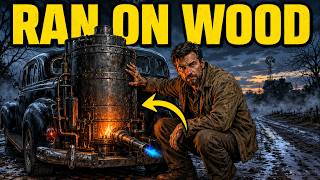
This $200 Wood Gas Generator Powered a Million Cars in WWII (Science Explained)
207 views

This $500 Iron Battery Still Works After 100 Years.
907 views
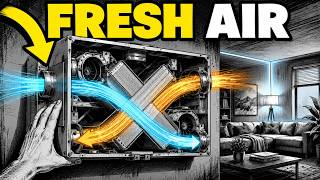
This $200 Box Brings Fresh Air And Cuts Your AC Bill FOREVER. Why Don't Builders Use It?
1.1K views
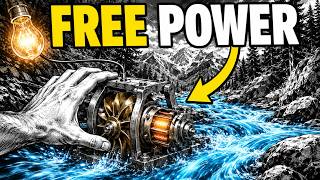
This $200 Creek Turbine Makes Free Power 24/7 FOREVER. So Why Did We Stop?
401 views
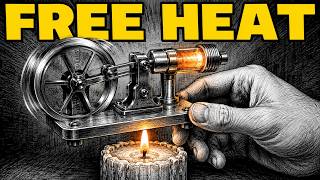
This $100 Engine Runs On A Candle FOREVER (Physics Explained)
529 views
Why 80°F Can Kill You But 100°F Won't (The Humidity Trap)
371 views