
Penicillins: classification, MOA, indications , side effects, pharmacokinetics.
Penicillins are bactericidal beta-lactam antibiotics that inhibit bacterial cell wall synthesis. A natural product, the penicillin structure has been modified to prepare a variety of semi-synthetic agents. The spectrum of antibacterial activity varies with each class of the penicillin family. The naturally occurring penicillins are generally effective against gram-positive organisms; the aminopenicillins against gram-positive and some gram-negative organisms; the carboxy and uriedopenicillins against gram-positive and gram-negative organisms, including pseudomonas; and the antistaphylococcal penicillins against staphylococcus and streptococcus. All of the penicillins have some anaerobic coverage, such as Clostridium infections, peptococcus. Penicillins are generally well-tolerated, with hypersensitivity being the major adverse effect. Penicillins are used to treat a variety of conditions including skin/skin structure infections, urinary tract infections, upper and lower respiratory infections, and endocarditis Mechanism of action Penicillins inhibit cell wall synthesis by interfering with formation of the peptidoglycan layer and are bacteriocidal. Specifically, penicillins bind to a transpeptidase enzyme whose function is to cross-link N-acetyl muramic acid and N-acetyl glucosamine (Fig. 4-3). This linkage provides bacteria with structural stability. This transpeptidase is one of several bacterial proteins that penicillin binds that are collectively referred to as penicillin-binding proteins (PBPs). Other PBPs that penicillins activate are autolysins that hydrolyze and destroy components of the cell as well as carboxypeptidases and endopeptidases that break peptide bonds. Show us your support by SUBSCRIBING,LIKING and SHARING. Connect with us on our website www.medcrine.com Follow us on twitter @medcrine Telegram at https://t.me/medcrine
🎬 More from Medcrine
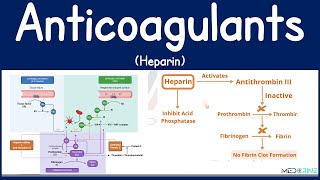
Anticoagulants: Heparin Mechanisms, Clinical Use, and Monitoring and Clinical Insights
1.2K views
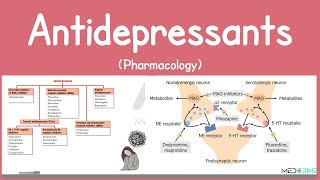
Antidepressants Pharmacology | SSRIs, SNRIs, TCAs, MAOIs, Atypical Antidepressants Simplified
1.0K views
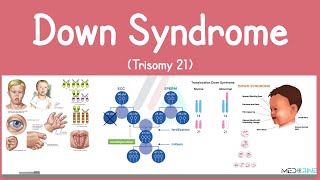
Down syndrome (Trisomy 21) - causes, symptoms, diagnosis, & pathology
376 views
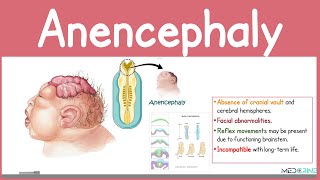
Anencephaly Explained | Neural Tube Defect | Medical and Nursing High-yield Tutorial
1.2K views
Achondroplasia | Causes, Pathophysiology, Symptoms, Diagnosis, and Management Simplified
959 views
Tension Pneumothorax: Pathophysiology, Clinical signs & Symptoms, Diagnosis and treatment Explained
580 views