
Clawdbot/OpenClaw Clearly Explained (and how to use it)
🛍️ Products Mentioned (4)

Creator Buddy
The #1 tool to find startup ideas/trends

LCA helps Fortune 500s and fast-growing startups build their future - from Warner Music to Fortnite to Dropbox. We turn 'what if' into reality with AI, apps, and next-gen products
The Vibe Marketer - Resources for people into vibe marketing/marketing with AI
I sit down with Alex Finn to break down how he sets up Moltbot (formally Clawdbot) as a proactive AI employee he treats like a teammate named Henry. We walk through the core workflow: Henry sends a daily morning brief, researches while Alex sleeps, and ships work as pull requests for review. Alex explains the setup that makes this work; feeding the bot deep personal and business context, then setting clear expectations for proactive behavior. We cover model strategy (Opus as “brain,” Codex as “muscle”), a “Mission Control” task tracker Henry built, hardware options, and the security mindset around prompt injection and account access. Timestamps 00:00 – Intro 02:08 – Clawdbot Overview 03:33 – The Morning Brief Workflow 05:01 - Proactive Builds: Trends → Features → Pull Requests 07:27 – The Setup: Context + Expectations For Proactivity 09:38 – The Onboarding Prompt Alex Uses 12:05 – Hunting “Unknown Unknowns” For Real Leverage 12:43 – Using the right Models for cost control 14:18 – Mission Control: A Kanban Tracker Henry Built 17:16 – The future of Human and AI workflow 22:01 – Hardware And Hosting: Cloud vs Local (Mac Mini/Studio) 25:47 – The Productivity Framework 27:10 – The Possible Evolution of Clawdbot 28:53 – Security and Privacy Concerns 33:38 – Closing Thoughts: Tinkering, Opportunity, And Next Steps Key Points * I get the most leverage when I treat the agent like a proactive teammate with clear expectations and rich context. * Henry delivers compounding value by shipping work for review (pull requests) based on trend monitoring and conversation memory. * I separate “brain” and “muscle” by delegating heavy coding to Codex while using Opus for reasoning and direction. * I track autonomous work with a dedicated “Mission Control” board so progress stays visible over time. * I keep risk contained by controlling environment and account access, especially around email and prompt injection. Alex's prompt: "I am a 1 man business. I work from the moment I wake up to the moment I go to sleep. I need an employee taking as much off my plate and being as proactive as possible. Please take everything you know about me and just do work you think would make my life easier or improve my business and make me money. I want to wake up every morning and be like "wow, you got a lot done while I was sleeping." Don't be afraid to monitor my business and build things that would help improve our workflow. Just create PRs for me to review, don't push anything live. I'll test and commit." Numbered Section Summaries 1. The “Always-On AI Employee” Thesis I open by pushing for concrete, repeatable use cases, and Alex frames the goal as a 24/7 AI employee that moves work forward continuously. 2. Henry’s Morning Brief And Proactive Night Shift Alex shows how he uses Telegram to interact with Henry and how the bot produces a morning brief plus overnight research and project momentum. 3. Trends → Shipping: The Pull Request Loop We unpack the “proactive builder” loop: Henry watches what’s trending, builds a feature (like article functionality for Creator Buddy), then packages it as a pull request for approval. 4. The Setup That Makes Proactivity Real Alex explains the two foundations: feed the bot maximum personal/business context, then define the working relationship so it initiates work and surfaces outputs for review. 5. Model Strategy: Brain vs Muscle Alex shares a practical operating model: Opus handles thinking and direction, while Codex handles the heavy building so usage stays efficient at scale. 6. Mission Control: A Persistent Task Ledger Alex walks through “Mission Control,” a Kanban-style tracker Henry created to keep a running history of tasks and completions beyond the scrollback limits of a single chat thread. 7. Hardware, Costs, And The Practical Path We compare hosting routes and land on a local-device approach as the default learning path, then tie costs to hiring equivalents rather than entertainment subscriptions. 8. Safety And “Agency Mode” I press on security, and Alex explains prompt injection risk plus an email strategy that keeps exposure contained while the open-source ecosystem matures. The #1 tool to find startup ideas/trends - https://www.ideabrowser.com/ LCA helps Fortune 500s and fast-growing startups build their future - from Warner Music to Fortnite to Dropbox. We turn 'what if' into reality with AI, apps, and next-gen products https://latecheckout.agency/ The Vibe Marketer - Resources for people into vibe marketing/marketing with AI: https://www.thevibemarketer.com/ FIND ME ON SOCIAL X/Twitter: https://twitter.com/gregisenberg Instagram: https://instagram.com/gregisenberg/ LinkedIn: https://www.linkedin.com/in/gisenberg/ FIND ALEX ON SOCIAL Youtube: https://www.youtube.com/@AlexFinnOfficial/videos X/Twitter: https://x.com/AlexFinnX Creator Buddy: https://www.creatorbuddy.io/
About This Video
Frequently Asked Questions
🎬 More from Greg Isenberg

23 AI Trends keeping me up at night
57.4K views

Stop Vibe Coding. Start Getting Customers.
87.2K views
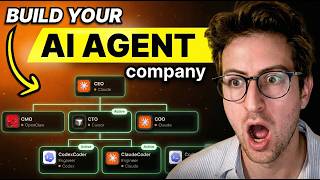
Paperclip: Hire AI Agents Like Employees (Live Demo)
230.3K views
Firecrawl AI clearly explained (and how to make $$)
143.5K views
I fixed OpenClaw so it actually works (full setup)
97.1K views
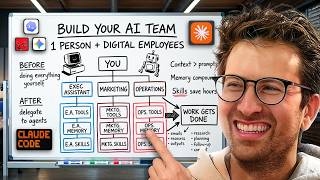
Building AI Agents that actually work (Full Course)
175.0K views