
Claude Opus 4.6 vs GPT-5.3 Codex
🛍️ Products Mentioned (5)

Bold Metrics
Personal Website
The #1 tool to find startup ideas/trends

LCA helps Fortune 500s and fast-growing startups build their future - from Warner Music to Fortnite to Dropbox. We turn 'what if' into reality with AI, apps, and next-gen products
The Vibe Marketer - Resources for people into vibe marketing/marketing with AI
I sit down with Morgan Linton, Cofounder/CTO of Bold Metrics, to break down the same-day release of Claude Opus 4.6 and GPT-5.3 Codex. We walk through exactly how to set up Opus 4.6 in Claude Code, explore the philosophical split between autonomous agent teams and interactive pair-programming, and then put both models to the test by having each one build a Polymarket competitor from scratch, live and unscripted. By the end, you'll know how to configure each model, when to reach for one over the other, and what happened when we let them race head-to-head. Timestamps 00:00 – Intro 03:26 – Setting Up Opus 4.6 in Claude Code 05:16 – Enabling Agent Teams 08:32 – The Philosophical Divergence between Codex and Opus 11:11 – Core Feature Comparison (Context Window, Benchmarks, Agentic Behavior) 15:27 – Live Demo Setup: Polymarket Build Prompt Design 18:26 – Race Begins 21:02 – Best Model for Vibe Coders 22:12 – Codex Finishes in Under 4 Minutes 26:38 – Opus Agents Still Running, Token Usage Climbing 31:41 – Testing and Reviewing the Codex Build 40:25 – Opus Build Completes, First Look at Results 42:47 – Opus Final Build Reveal 44:22 – Side-by-Side Comparison: Opus Takes This Round 45:40 – Final Takeaways and Recommendations Key Points * Opus 4.6 and GPT-5.3 Codex dropped within 18 minutes of each other and represent two fundamentally different engineering philosophies — autonomous agents vs. interactive collaboration. * To use Opus 4.6 properly, you must update Claude Code to version 2.1.32+, set the model in settings.json, and explicitly enable the experimental Agent Teams feature. * Opus 4.6's standout feature is multi-agent orchestration: you can spin up parallel agents for research, architecture, UX, and testing — all working simultaneously. * GPT-5.3 Codex's standout feature is mid-task steering: you can interrupt, redirect, and course-correct the model while it's actively building. * In the live head-to-head, Codex finished a Polymarket competitor in under 4 minutes; Opus took significantly longer but produced a more polished UI, richer feature set, and 96 tests vs. Codex's 10. * Agent teams multiply token usage substantially — a single Opus build can consume 150,000–250,000 tokens across all agents. Numbered Section Summaries 1) Setup and Configuration for Opus 4.6 I have Morgan walk through the exact steps every developer needs: update via NPM, verify version 2.1.32+, set the model to Opus in settings.json, and — critically — enable the experimental Agent Teams flag by setting `claude_code_experimental_agent_teams` equal to one. He also covers adaptive thinking (API-only), effort levels (max is Opus 4.6 exclusive), and TMUX split panes for visualizing multiple agents in action. 2) Feature-by-Feature Comparison Opus 4.6 offers a 1-million-token context window, strong architectural comprehension, and less tendency to write reckless code. GPT-5.3 Codex has a roughly 200,000-token context window, wins on SWE-Bench Pro and coding benchmarks, and excels at progressive execution and rapid iteration. Morgan frames it well: Claude is your senior staff engineer asking "should we do this?" while GPT-5.3 is your founding engineer asking "how fast can I ship this?" 3) Live Build: Prompt Design and Fair Setup Morgan creates separate prompts tailored to each model's strengths. For Opus, he instructs it to build an agent team with four specialists (architecture, prediction market domain, UX, testing). For Codex, he gives a parallel prompt asking it to think deeply about the same four areas. He starts both at essentially the same moment to keep the comparison honest. 4) Final Verdict and Recommendations Morgan is clear: this is about methodology, not a winner-takes-all contest. Opus 4.6 excels when you want to delegate whole chunks of work to autonomous agents and review comprehensive results. Codex 5.3 excels when you want a fast, interactive collaborator you can steer in real time. Many teams will end up using both. Morgan encourages engineering leaders to give their teams access to both models and let them experiment. The #1 tool to find startup ideas/trends - https://www.ideabrowser.com/ LCA helps Fortune 500s and fast-growing startups build their future - from Warner Music to Fortnite to Dropbox. We turn 'what if' into reality with AI, apps, and next-gen products https://latecheckout.agency/ The Vibe Marketer - Resources for people into vibe marketing/marketing with AI: https://www.thevibemarketer.com/ FIND ME ON SOCIAL X/Twitter: https://twitter.com/gregisenberg Instagram: https://instagram.com/gregisenberg/ LinkedIn: https://www.linkedin.com/in/gisenberg/ Morgan Linton X/Twitter: https://x.com/morganlinton Bold Metrics: https://boldmetrics.com/ Personal Website: https://linton.ai/
About This Video
Frequently Asked Questions
🎬 More from Greg Isenberg

23 AI Trends keeping me up at night
57.4K views

Stop Vibe Coding. Start Getting Customers.
87.2K views
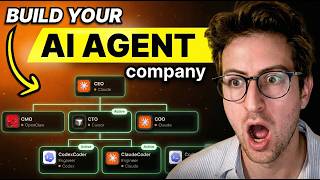
Paperclip: Hire AI Agents Like Employees (Live Demo)
230.3K views

Firecrawl AI clearly explained (and how to make $$)
143.5K views
I fixed OpenClaw so it actually works (full setup)
97.1K views
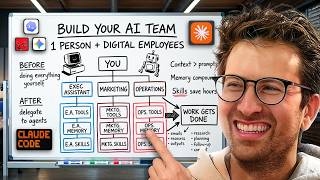
Building AI Agents that actually work (Full Course)
175.0K views