
How to Write a Method/Methodology Section of Thesis or Research Paper - Urdu/Hindi
Writing Method Sections The main purpose of this section is to convince the reader that you chose the right method and that you did it correctly. 1. Explanation of study design (e.g., Experiment, Interviews, online survey) 2. Sample Characteristics/Participants characteristics a) The participants should be described in enough detail for the reader to visualize them. For example: Ninety-eight students at two urban high schools in the northeastern United States served as the sample for this study. These participants attended inner-city high schools that are composed predominantly of students of color from poor and working-class urban neighborhoods; the final sample consisted of 56 females and 42 males. The mean age for all participants was 15.44 (SD = .96); 48 of the participants were in the ninth grade (49%) and 50 in the tenth grade (51%). b) Provide detailed information on nonparticipants when possible. For example: Initial recruitment letters were sent, on a rolling basis, to all participants who had been referred to the program within a 12-month period. The letters were sent within 2 months of the referral. A second recruitment letter and a follow-up phone call followed, if needed. In 12 months, 76 referred clients were solicited for research participation; 23 responded that they were interested, with 20 ultimately participating. c) Consider reporting demographics in tables. d) Sampling (some descriptive statistics, like demographics (education, experience, etc.), sample size; don`t forget to discuss response rate (number of responses as a percentage of number of people invited to do the study)). Explicitly acknowledge weaknesses in sampling. 3. Measurement/Measures/Construct operationalization (where did you get your measures?) Instrument development (if you created your own measures). Describe the measures after describing the participants. a) Describe the traits a measure was designed to measure, its format, and the possible range of score values. Example: Attitude toward school was measured with a questionnaire developed for use in this study. It contains nine statements. The first three measure attitudes toward academic subjects. The next three measure attitudes toward teachers, counselors, and administrators. The last three measure attitudes toward the social environment in the school. Participants were asked to rate each statement on a five-point scale from 1 (strongly disagree) to 5 (strongly agree). Scores for individual participants could range from 9 (strongly disagreeing with all nine statements) to 45 (strongly agreeing with all statements). The complete questionnaire is shown in Appendix A of this journal article. b) Summarize information on reliability and validity, when available. c) Provide references where more information on the measures can be found. d) Consider providing sample items or questions. The Positive Bonding Scale was adapted from the Couple Activities Scale (Markman, 2000). It consists of nine questions assessing the friendship, intimacy, fun, felt support, and sensual/sexual relationship of the couple. Example questions include "We regularly have conversations where we just talk as good friends," "We have a satisfying sensual or sexual relationship," "I feel emotionally supported by my partner," and "We regularly make time for fun activities together as a couple." Stanley, Whitton, Kline, and Markman (2006) report logical convergence of the parent scale with other indices of individual and marital functioning. e) Make unpublished measures available. 4. Data Collection a) Describe the informed consent procedures, if any. b) Consider describing steps taken to maintain confidentiality of the data. c) Mention that IRB exempt status was granted, and protocols were followed if applicable. 5. Data Analysis a) Method for testing hypotheses (e.g., structural equation modeling in AMOS). If you conducted multi-group comparisons, mediation, and/or interaction, explain how you kept them all straight and how you went about analyzing them. For example, if you did mediation, what approach did you take (hopefully bootstrapping)? Were there multiple models tested, or did you keep all the variables in for all analyses? If you did interaction, did you add that in afterward, or was it in from the beginning? Research Papers Used in Video 1. Parents’ Shift Work in Connection with Work–Family Conflict and Mental Health: Examining the Pathways for Mothers and Fathers 2. The role of identity uncertainty in predicting relational turbulence and perceived partner communication for women coping with infertility Thesis 1. Transition into Marriage: A Quantitative Test of the Relational Turbulence Theory 2. Incorporating Social Network Variables into Relational Turbulence Theory: Popping the Dyadic Bubble
🎬 More from Doctor Square

No Login Required | Download TikTok Posts Data to Excel in 2026 | Export TikTok to CSV for Research
167 views
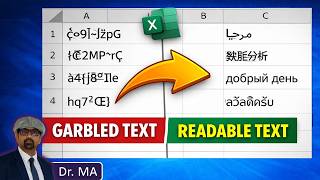
Fix Non-English Text in Excel - Fix Unreadable Multilingual Text in Excel
370 views

Download Twitter Data to Excel (No Coding) - 2026 | Export X Tweets to CSV
2.2K views

SciSpace New Features in 2026 - My Library, Zotero, Save to Notebook and Generate Report
79 views

SOLVED: How to Fix SPSS Login Blank Screen Issue | SPSS 31, 30 & 29 Trial Activation Fix
3.7K views

Can We Really Detect AI Writing in Research Papers? Testing SciSpace AI Detector
55 views