
DEF CON 33 - TSPU: Russia's Firewall and Defending Against Digital Repression - Benjamin Mixon-Baca
When the first measurement studies of the GFW came out in the early 2000s, computation and power consumption were 30,000X greater than they are today. Because of this, China’s GFW resided deeper in the network and further away from homes and data centers. The substantial increase in computational efficiency has made processing and filtering in-path and near connection end-points viable while the volume of network traffic in today’s Internet has made this design a virtual necessity. Russia’s censorship apparatus, the TSPU, has emerged as a state-of-the-art system, on par with the GFW, and a potentially more significant threat, particularly for users of Russian apps and data centers. There are two reasons for this. First, Russia’s design, which places censors in-path and closer to end-hosts (residential modems and data center connections), permits more granular, targeted attacks. Second, according to the Russian government, sanctions have compelled them to build their own certificate authority and require all Russian software to trust this certificate authority. Combining these two factors implies major threats to users interacting with Russian data centers and software. Fortunately, research has identified cases where the TSPU can be circumvented. New tools based on these ideas could be the future of circumvention.
🎬 More from DEFCONConference

DEF CON 34 - DEF CON Policy Announcement - Katie Noble, Heather West
5.4K views

DEF CON 33 - DisguiseDelimit: Exploiting Synology NAS with Delimiters and Novel Tricks - Ryan Emmon
11.1K views

DEF CON 33 - Browser Extension Clickjacking: One Click and Your Credit Card Is Stolen - Marek Tóth
8.5K views

DEF CON 33 - Can't Stop the ROP: Automating Universal ASLR Bypasses - Bramwell Brizendine
3.6K views

DEF CON 33 Recon Village - Building Local Knowledge Graphs for OSINT - Donald Pellegrino
5.4K views
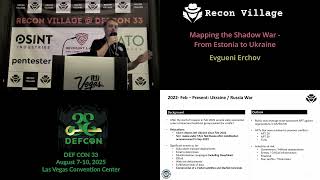
DEF CON 33 Recon Village - Mapping the Shadow War From Estonia to Ukraine - Evgueni Erchov
6.4K views