
I Taught My Second Brain to Run Multi-Agent Coding Workflows (Live Session)
So I've been working on something for a while now that I haven't really talked about publicly yet. It's the next evolution of Archon - an AI tool that orchestrates coding agents in a way you've never seen before - and today I'm going to give you the first real look at it by actually using it live! But here's what makes this different from a normal coding stream. I'm not just coding with AI - I'm coding with my AI second brain. It knows my codebase, it knows my decisions, it knows context from weeks ago. And Archon is basically an extension of that. So what you're going to see today is what AI coding actually looks like when everything is connected - your memory, your agents, your workflows, all working together. Anthropic just published this really cool paper on how they structure agents for long-running tasks, so I'm going to take that concept and build it live using this setup!
About This Video
Frequently Asked Questions
🎬 More from Cole Medin
Full Guide - Build Your Own AI Second Brain with Claude Code
32.4K views

Coding Agent Reliability EXPLODES When They Argue (New Adversarial Dev Technique)
9.2K views
My Claude Code Now Fixes My GitHub Issues Without Touching My Machine (Free Tool!)
6.1K views
Everything You Thought About Building AI Agents is Wrong
20.7K views
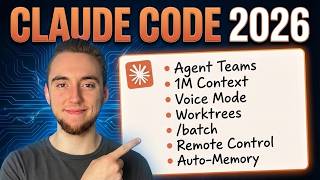
You're Hardly Using What Claude Code Has to Offer, it's Insane
16.6K views

The Subagent Era Is Officially Here - Learn this Now
8.1K views