Episode 109 - Checking on the Cariani Beehive Mid June
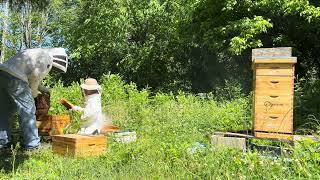
Queen of Hearts 💕 Hive ..At Cariani Farms, ensuring the health and vitality of the bee colony is a paramount aspect of our beekeeping practices. A typical healthy hive inspection at Cariani Farms would involve a methodical and calm approach, prioritizing the well-being of the bees. The beekeeper, Astrid, begins by observing the hive's external activity, noting the traffic of foragers bringing in pollen and nectar, and checking for any unusual behavior or dead bees at the entrance, which could indicate a problem. Approaching the hive, ina. Clam manner helps keep the bees from getting upset. This calms the bees by masking their alarm pheromones and causing them to gorge on honey, making them less defensive. With the bees pacified, the beekeeper would carefully remove the outer and inner covers, placing them carefully beside the hive as a temporary stand for the supers. Then, frame by frame, the beekeeper would systematically examine the hive's interior. Key indicators of a healthy hive that Cariani Farms would be looking for include: * (we did not check for the queen today since the hive looked good and no swarm cells were filled) Queen Presence and Health: Evidence of a healthy, actively laying queen is crucial. This is often indicated by a consistent, compact brood pattern with eggs, larvae, and pupae in all stages of development. The beekeeper might also try to visually locate the queen, noting her size, color, and movement. * Brood Pattern: A solid, uniform brood pattern, where most cells in the brood frames contain young, healthy bees in various stages, signifies a strong queen and a healthy colony. Gaps or a "shotgun" pattern can indicate a failing queen or disease. * Honey and Pollen Stores: Ample reserves of honey (for energy) and pollen (for protein) are essential for colony growth and survival. The beekeeper would assess the amount and distribution of these resources, ensuring the bees have enough food, especially for raising new brood. * (the hive looked fantasy today with no hive beetles present in the trap and all thee bees looked healthy on visual inspection) Absence of Pests and Diseases: A meticulous check for signs of common bee ailments is critical. This includes looking for Varroa mites (small, reddish-brown parasites on bees or comb), American or European Foulbrood (diseases affecting the brood, causing sunken, discolored caps or foul odors), wax moths, or other unusual organisms. Any suspicious findings would be carefully documented for further action. * (the hive had plenty of bees and the frames were full with honey) Overall Population and Behavior: A healthy hive should have a robust population of adult bees, working cohesively. The bees should appear calm and industrious, not agitated or sluggish. The beekeeper would note the general temperament and number of bees in each box. * Comb Quality: Healthy hives typically have well-built, straight comb. The beekeeper would inspect for any irregular or damaged comb that might hinder the colony's development. Throughout the inspection, the beekeeper would work calmly and gently, minimizing disturbance to the bees. Detailed notes would be taken, recording observations such as queen status, brood patterns, food stores, and any signs of pests or diseases. This meticulous record-keeping is vital for tracking the long-term health of the Cariani Farms apiary and making informed management decisions. Once the inspection is complete, the frames and hive components would be carefully reassembled, ensuring no bees are crushed and the hive is secure. The beekeeper would then step back, allowing the colony to settle back into its routine, knowing they've taken the necessary steps to ensure the continued well-being of their valuable pollinators.